
HERABIT, the Group’s digital company, strengthens its synergy with Hera and expands its presence to new areas.
Focus
Focus
Category Facet
Custom Facet
Search Results
-
Web Content Article · By Palvi Andrea Tonziello On Aug 4, 2020 5:25 PM
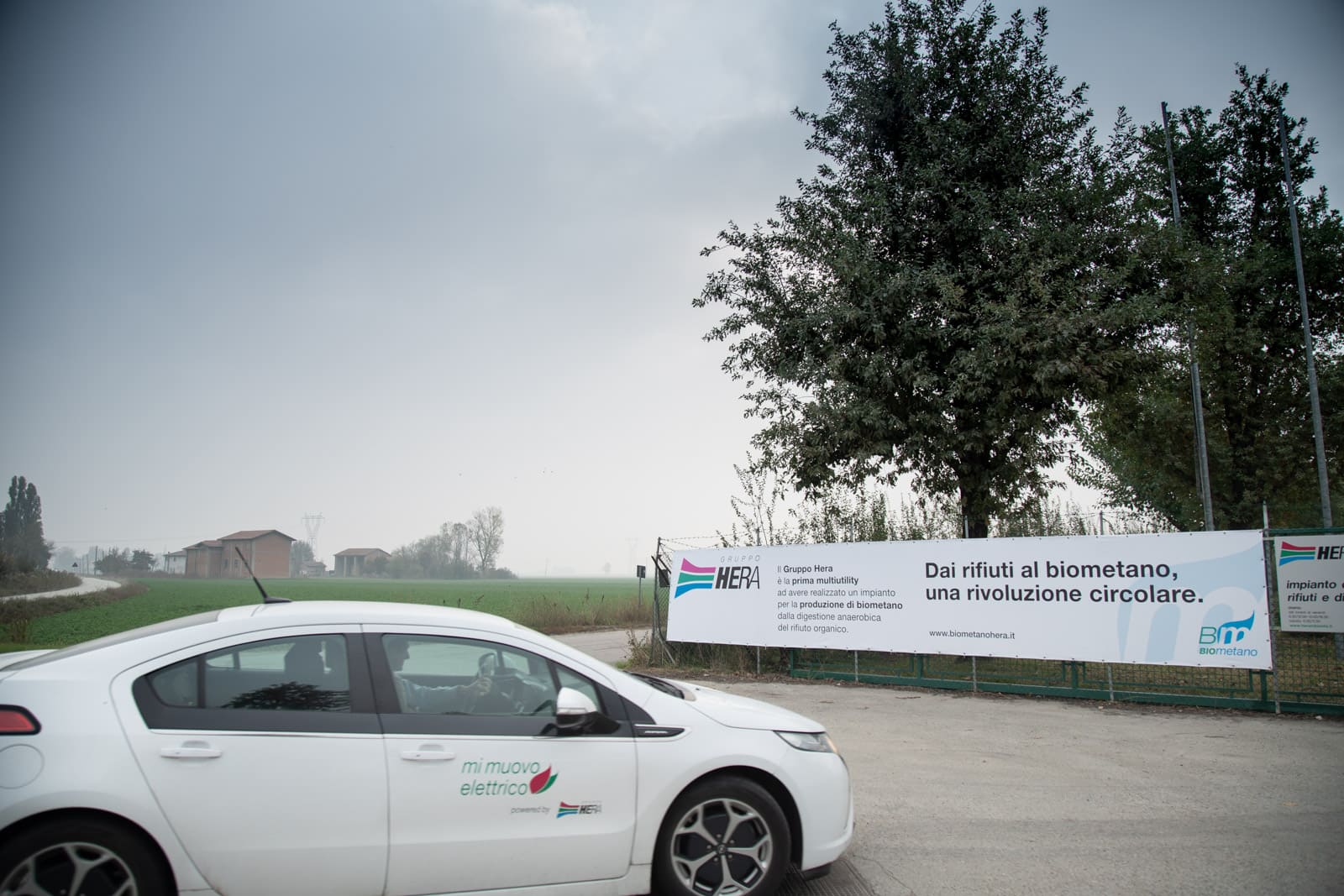
A revolution rooted in the circular economy: thanks to separate waste collection, organic waste is fed into an anaerobic digestion process to produce biogas.
circulareconomy Categoria Progetto: Innovation Heratech Project Innovation Categories: Regeneration of resources -
Web Content Article On Aug 4, 2020 4:19 PM
The ultrasound hydrolysis system, installed in the Forlì treatment plant, makes the life cycle of wastewater sludge circular. The result: less sludge to dispose of, and more biogas produced.
circulareconomy Categoria Progetto: Innovation Circular Economy Water Project -
Web Content Article On Aug 4, 2020 4:07 PM
We have installed a turbo expander at the R&M stations of Ducati's factory in Bologna. The goal is to recover electricity from the decompression process of methane gas.
circulareconomy Categoria Progetto: Innovation Energy Efficiency -
Web Content Article On Aug 4, 2020 3:28 PM
A major step forward in reducing environmental impact and optimising waste management: by harnessing the natural decomposition of landfill waste, Hera is producing clean energy to fuel Ravenna’s...
circulareconomy Categoria Progetto: Innovation Circular Economy Innovation Categories: Regeneration of resources
Asset Publisher
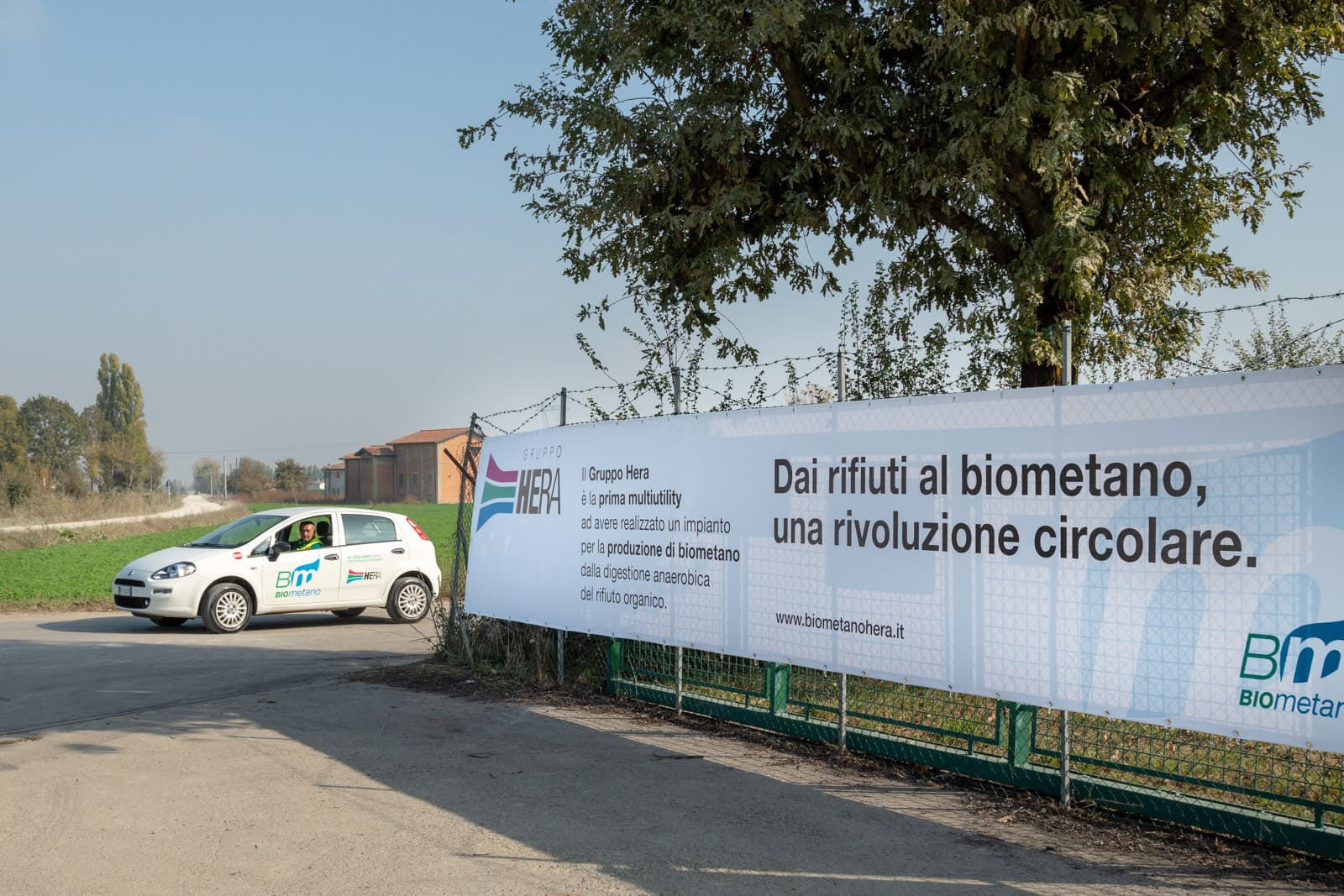
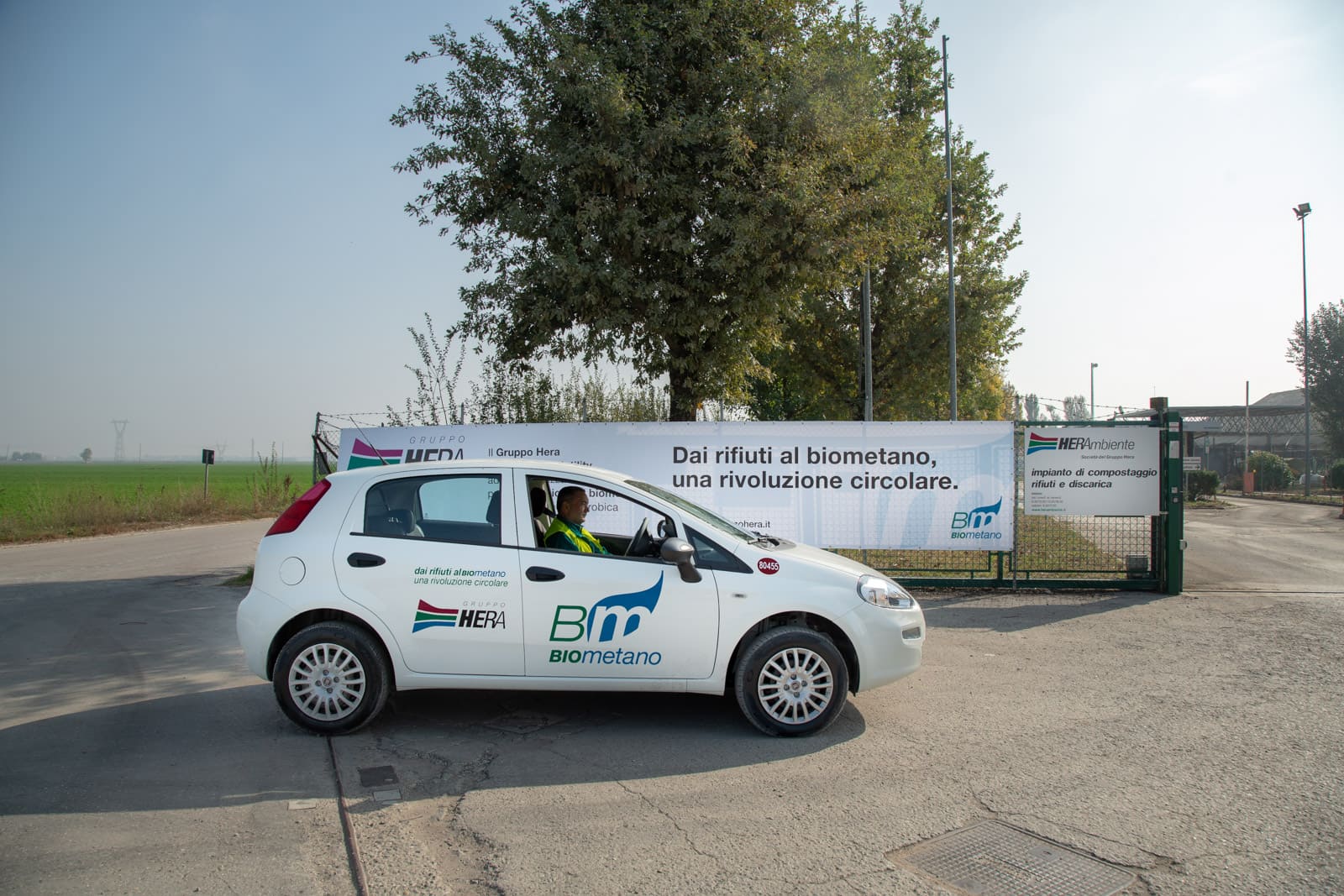
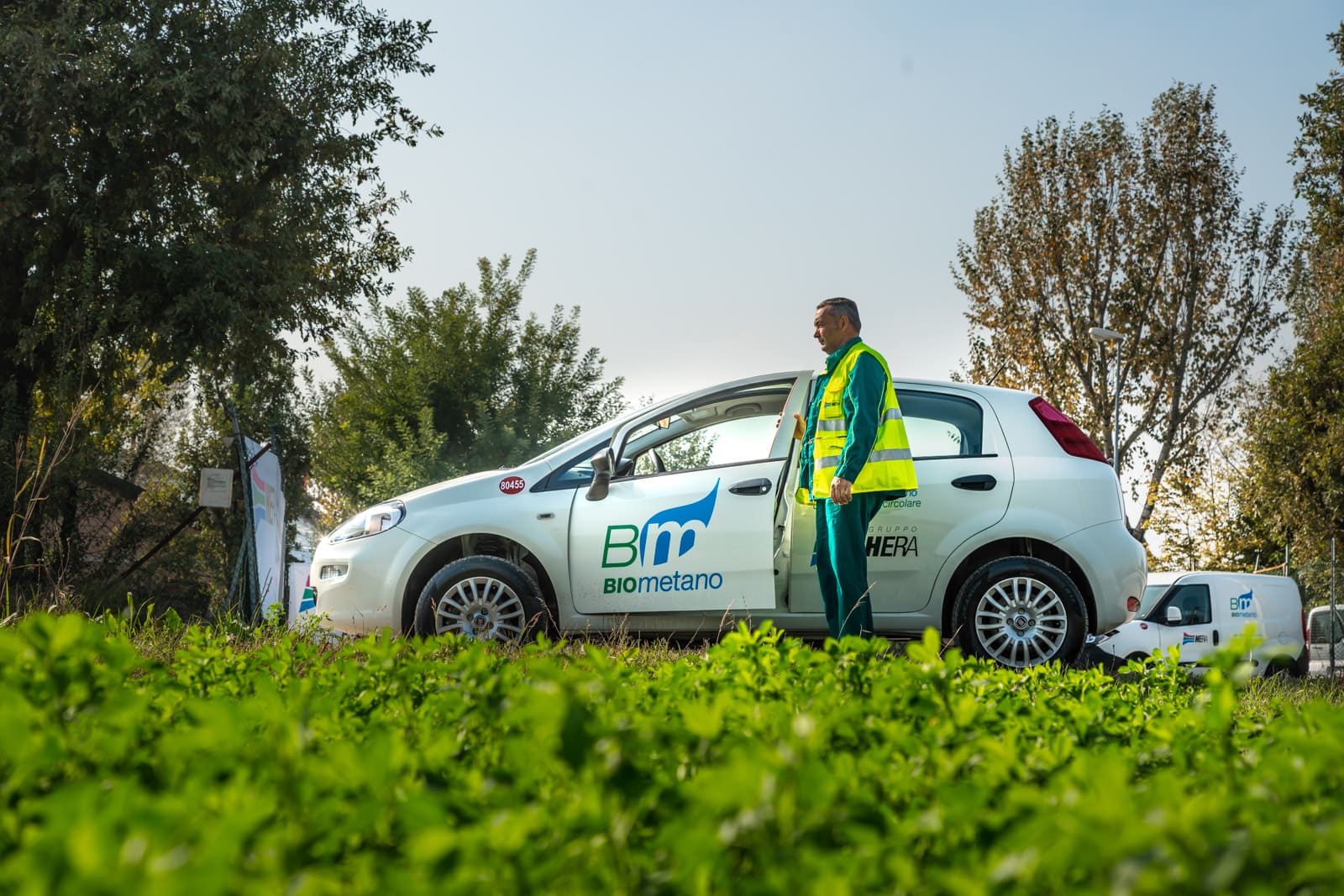
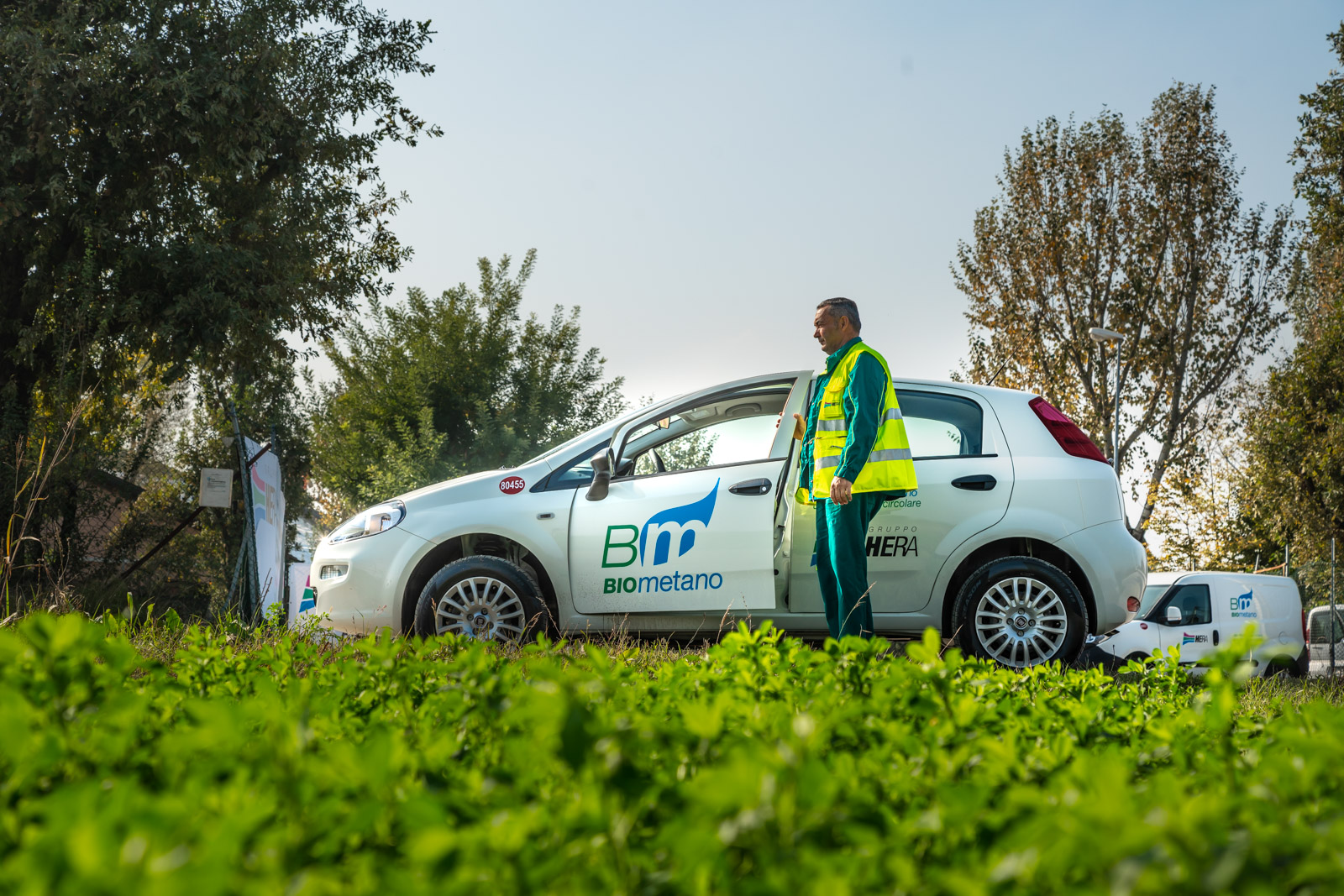
A revolution rooted in the circular economy: thanks to separate waste collection, organic waste is fed into an anaerobic digestion process to produce biogas.
Biomethane: a clean resource of biological origin
So, what makes this source of methane “bio”? Quite simply, it’s how it is produced: not by drilling into deep underground deposits, but by fermenting organic waste in dedicated facilities. Biomethane can be produced continuously, it is inexhaustible, and production can be increased simply by building more plants. This makes it one of the clearest examples of a circular economy.
In Spilamberto, a biodigester converted into a biomethane plant
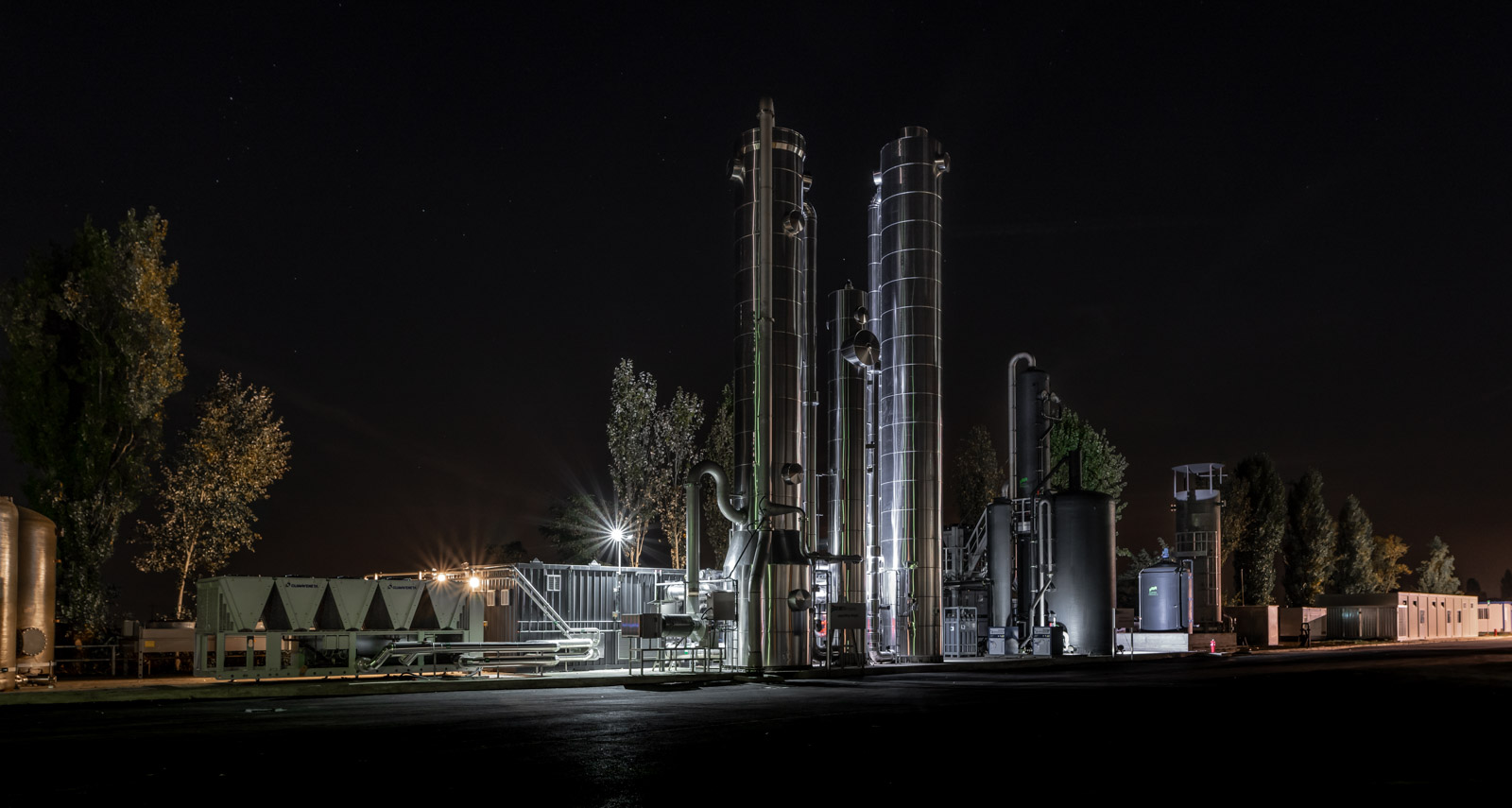
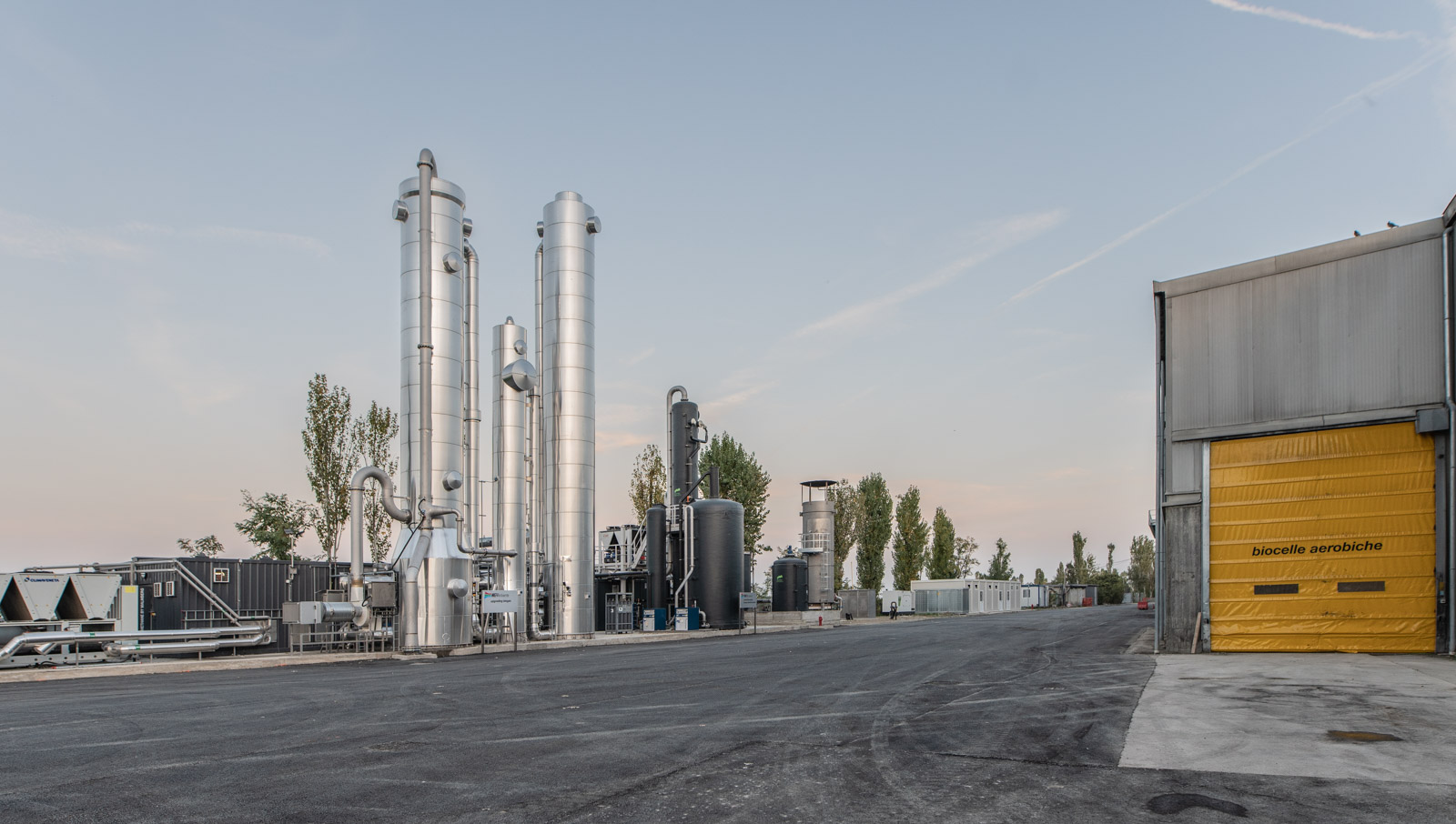
An innovative plant for the production of biomethane is in operation in Spilamberto, in the province of Modena. It was developed by the NewCo Biorg, a joint venture between the Hera Group and Inalca (Cremonini Group), through a total investment of around €28 million and the use of the best available technologies.
Starting from separately collected organic waste and agri-food effluents, the plant – the result of converting an old biodigester – produces, at full capacity, 3.7 million cubic metres of biomethane per year, a 100% renewable fuel intended for transport, and around 18,000 tonnes of compost.
A cutting-edge plant for the energy transition and the circular economy
The 100% renewable natural gas is produced through anaerobic digestion of organic waste from separate collection carried out mainly in Modena and the province, along with waste from local agri-food processing and meat production by Inalca. Once refined, it becomes biomethane and can be fed into the gas network.
Significant environmental benefits: around 7,000 tonnes of CO₂ avoided
Thanks to the injection of biomethane into the network and its use in transport, significant environmental benefits are expected. Every year, around 3,000 tonnes of oil equivalent (TOE) in fossil fuels are saved, and approximately 7,000 tonnes of CO₂ emissions are avoided. Absorbing such an amount of CO₂ would require, on average, 280,000 trees.
What happens in our plant in Sant'Agata
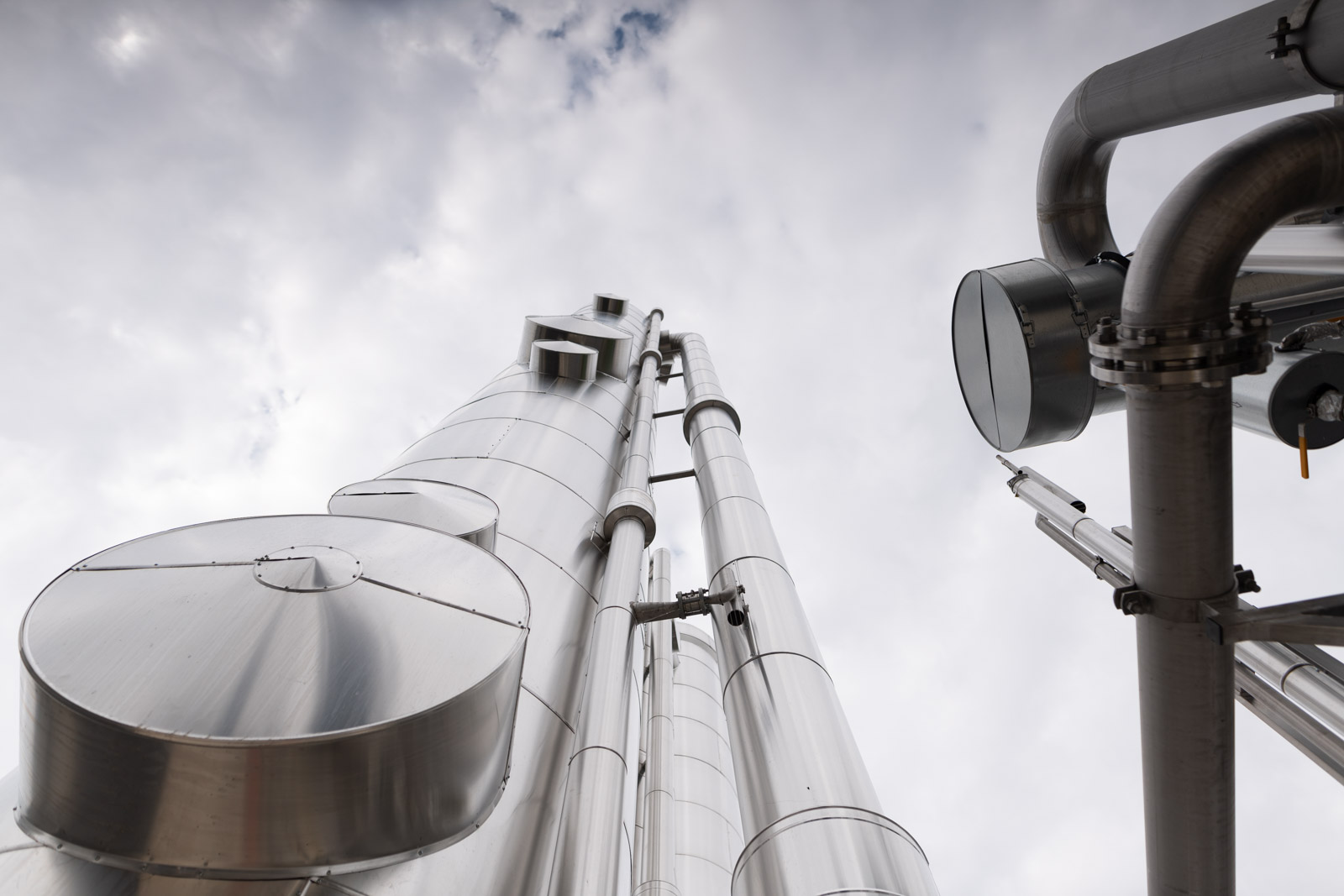
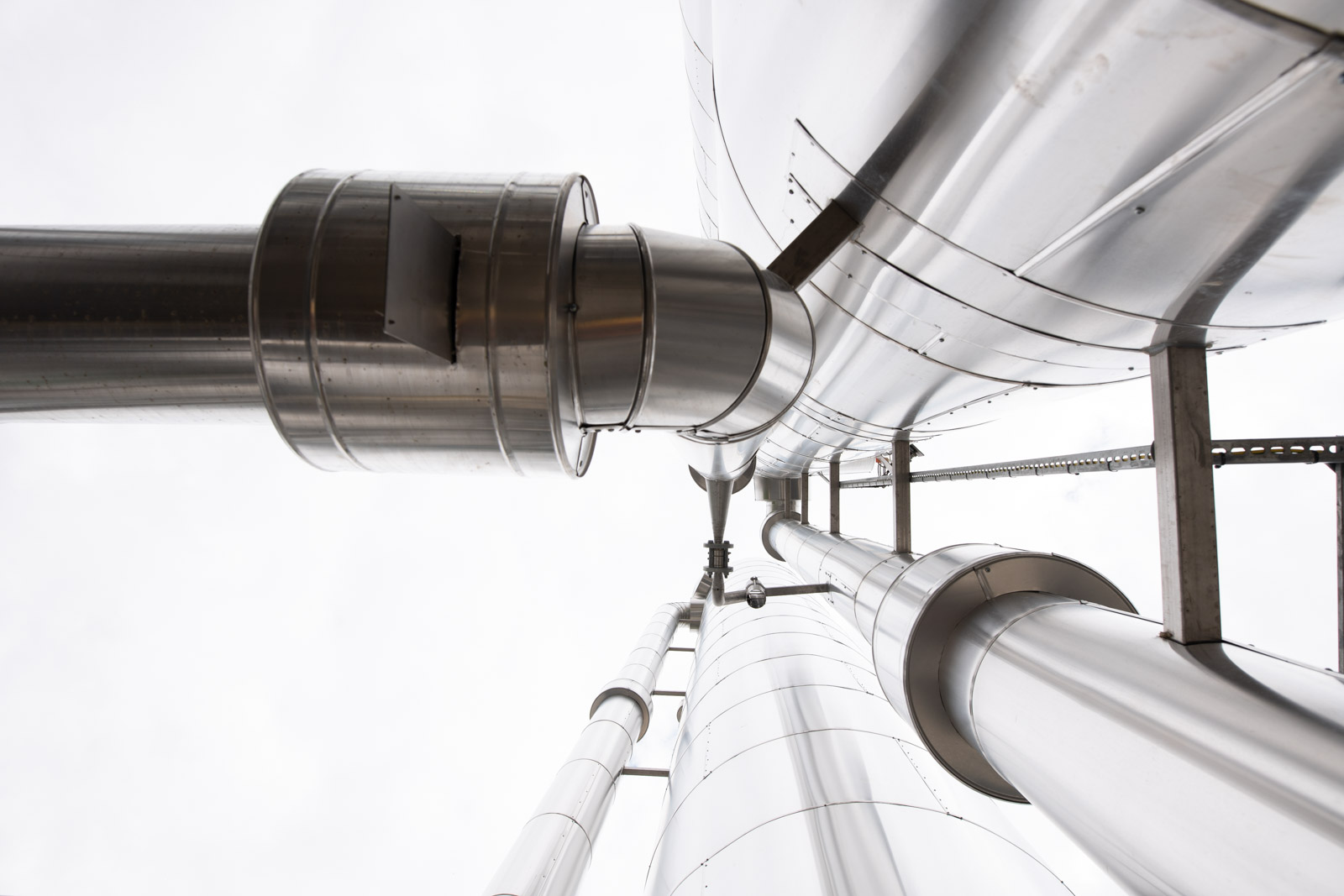
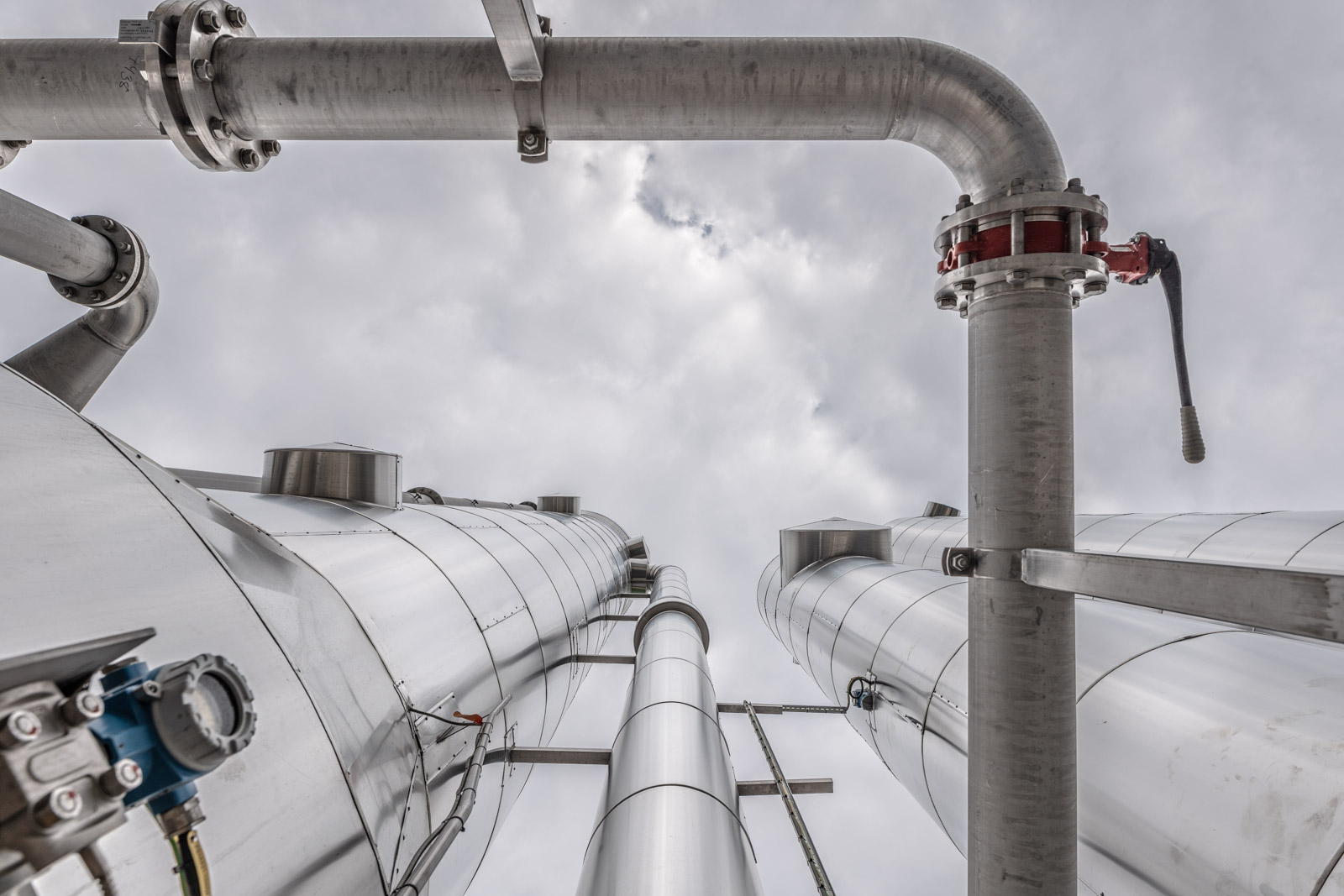
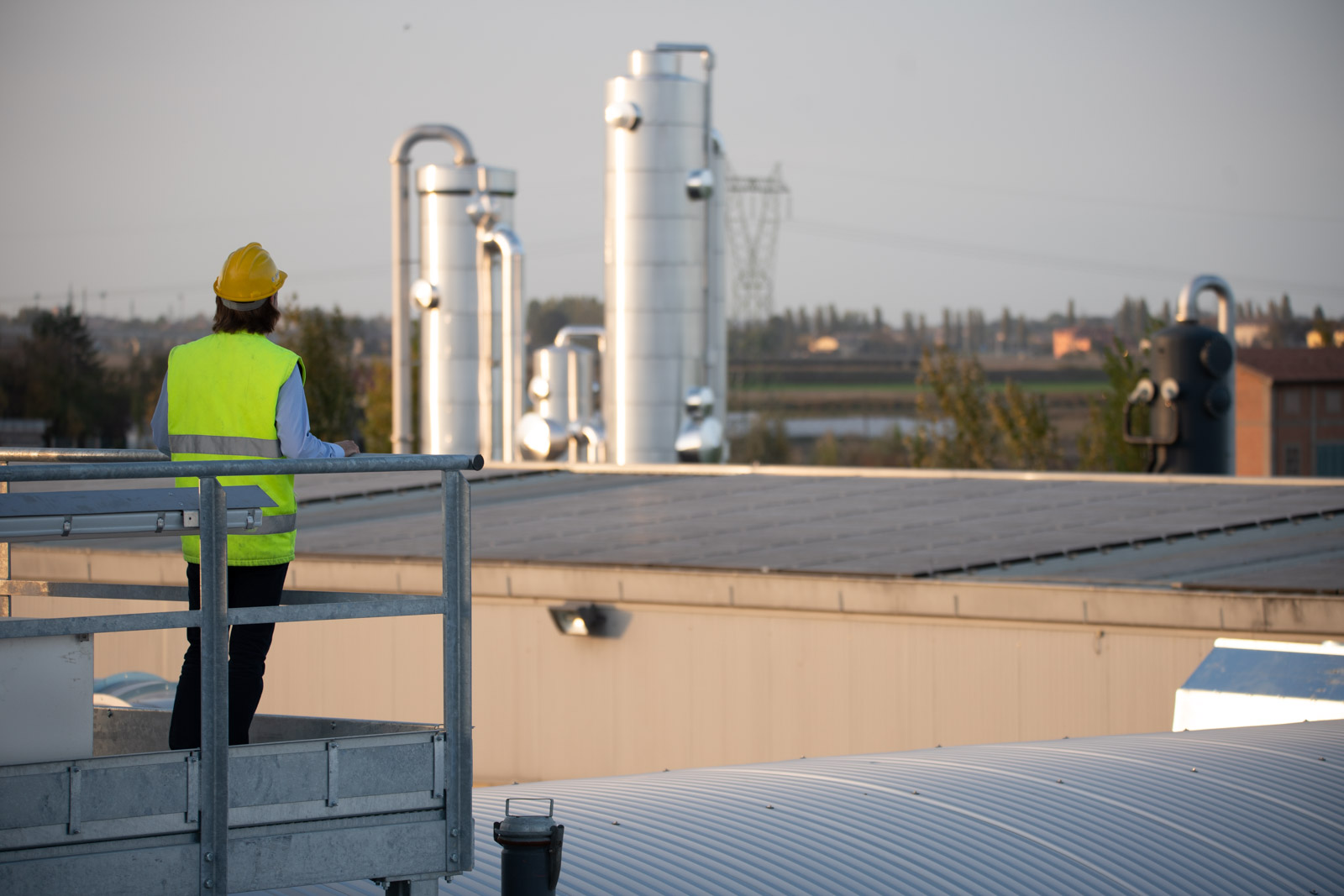
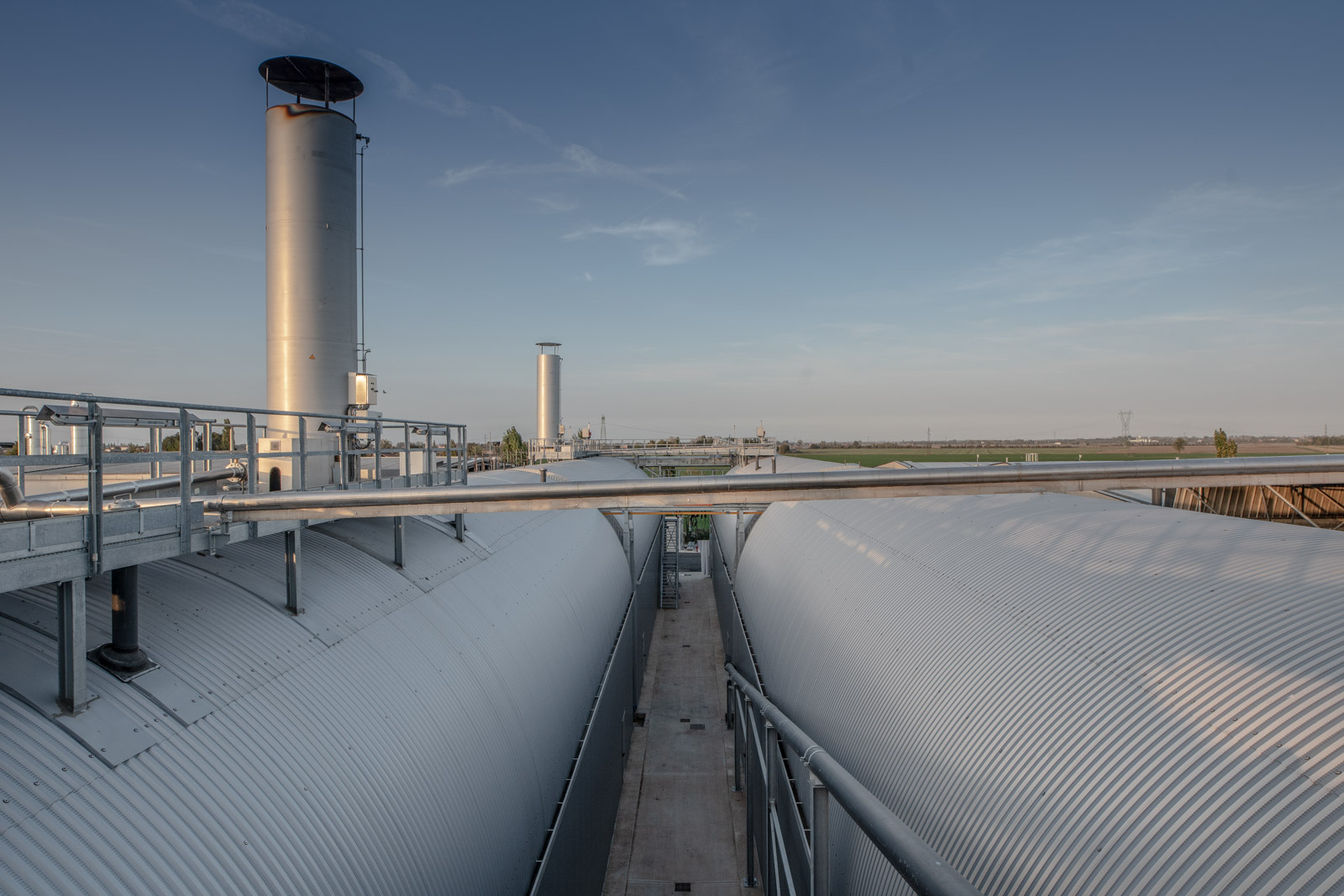
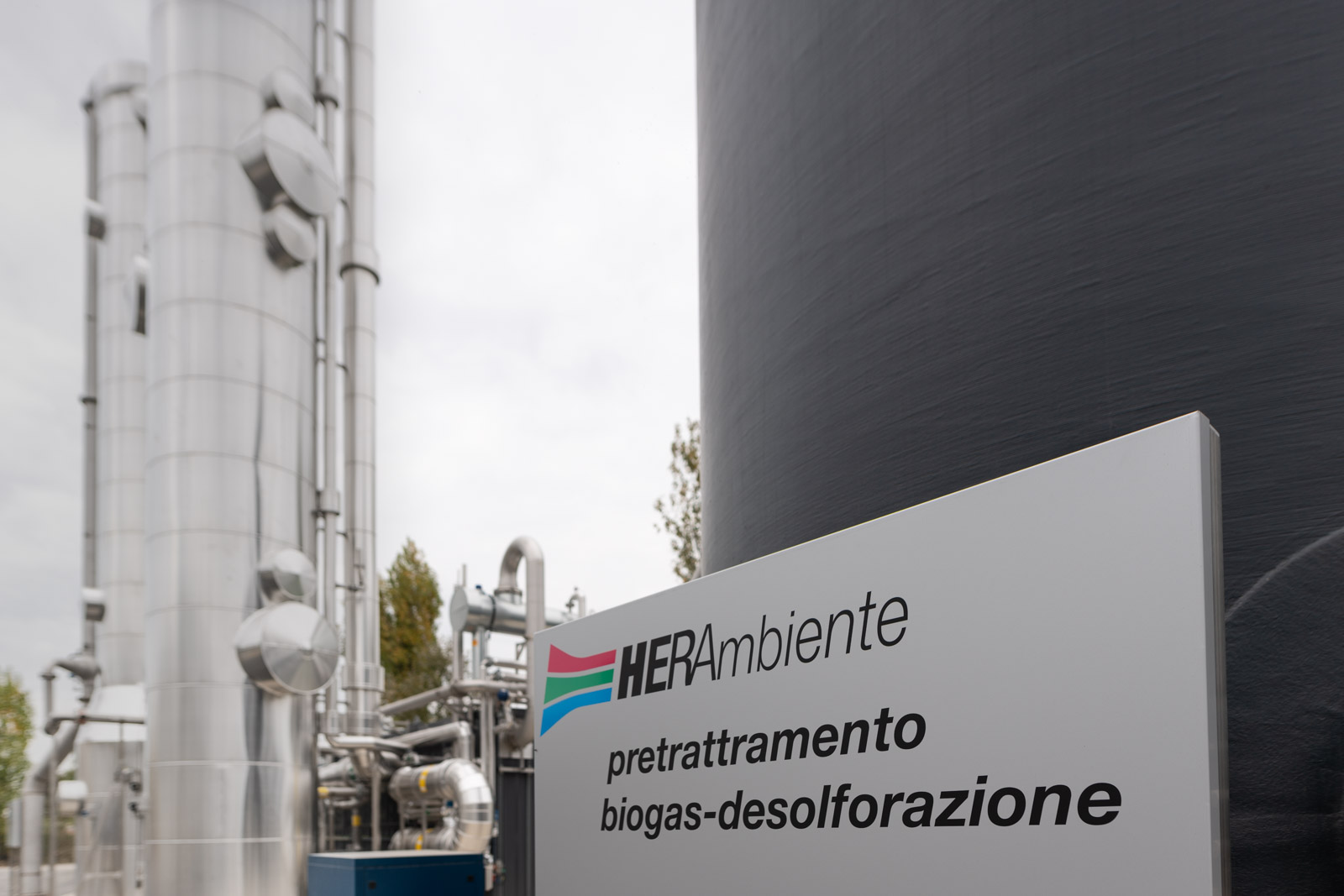
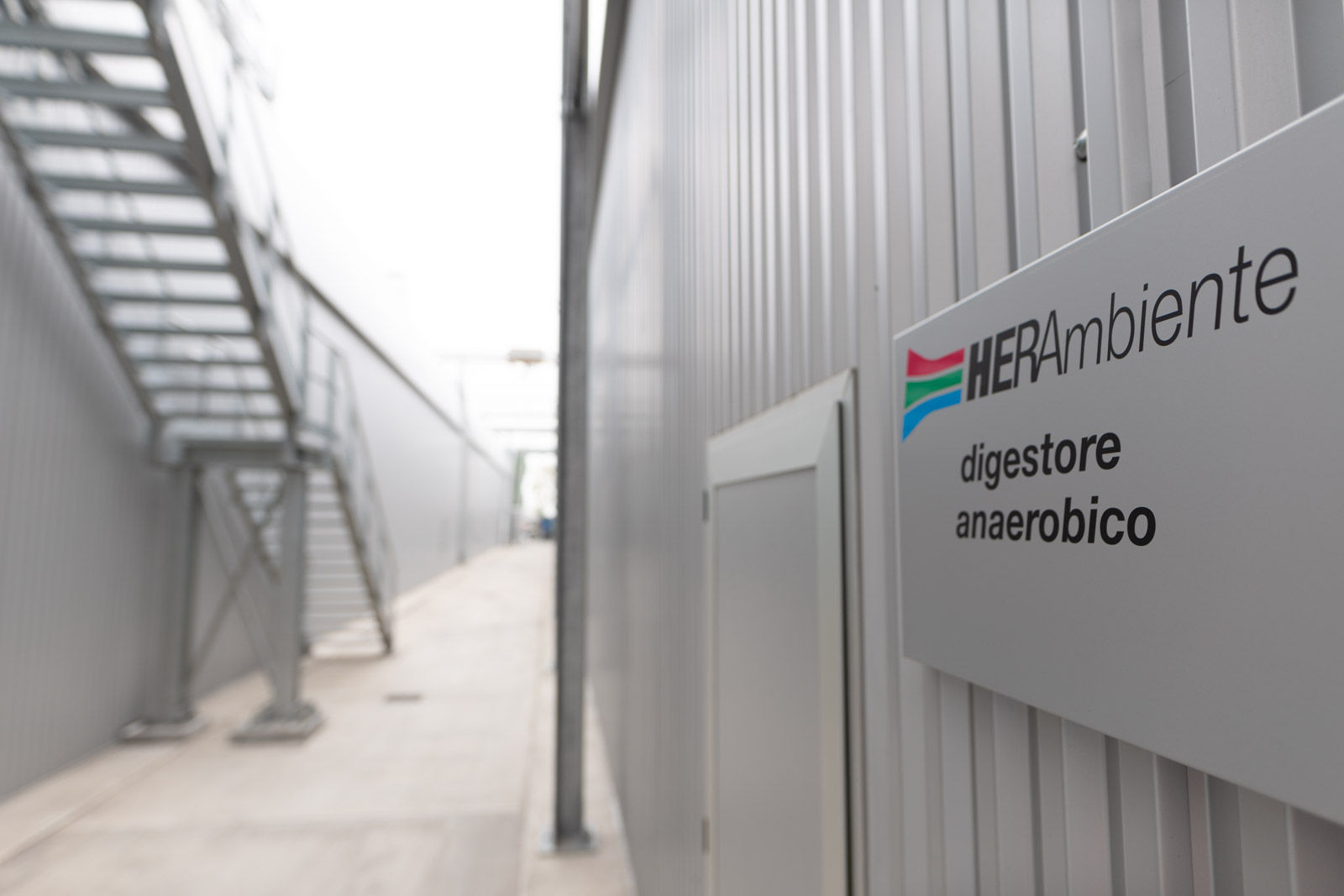
Organic waste, collected through separate waste collection, undergoes anaerobic digestion to produce biogas. This is how the process works: the waste is shredded and screened, then remains for about 21 days in four horizontal digesters, where suitable microorganisms carry out the digestion process and produce biogas (composed of methane and carbon dioxide). After this, the biogas undergoes an upgrading, or purification, phase using pressurised water: the carbon dioxide dissolves and separates from the methane. The result is biomethane, a gas with a methane content above 95%, and a completely renewable source of energy. Not only that: at the end of the digestion process, lignocellulosic material is added to the outgoing solid fraction, producing a compact mass that then undergoes composting to create high-quality compost, which can be used as potting soil or agricultural fertiliser.
Biomethane is therefore another revolution rooted in the circular economy, one that we at Hera Group are committed to advancing. We do all this with the goal of creating shared value, as Andrea Ramonda, CEO of Herambiente, emphasises: “The direction we have taken looks towards the industrial sector with an increasing focus to creating shared value and partnerships. We are aware that sustainable waste management, focused on recovery and in full compliance with regulations, is essential in today’s world and generates benefits for the entire community.”
Working together for a circular city
At Hera Group, we have joined forces with Bologna Airport and Tper to launch a circular economy project that contributes to decarbonising urban mobility and improving air quality.
What does this partnership involve? The Airport delivers its organic waste to Hera, which collects it at the Sant'Agata Bolognese plant together with similar waste produced by citizens and transforms it into biomethane that Tper purchases to feed the fuel tanks of a significant part of its bus fleet.
This is an important step forward for our Group and for two major organisations in our area, which, like us, serve hundreds of thousands of people. We share a commitment to improvement and sustainability, in line with the UN 2030 Agenda.
Cookies disabled - content not available
Search Bar
Tag Facet
Search Results
Asset Publisher
HERABIT, the Group’s digital company, strengthens its synergy with Hera and expands its presence to new areas.
Expanding fibre coverage in industrial areas and boosting data centre services: a growing offering for businesses and individuals.
The goal of the company (formerly Acantho), which also reflects its evolution over time, is to play an active role in shaping the future of the area in which it operates. It does this through innovation and support for local business districts by offering services and tools that help both small and large companies become more competitive.
Thanks to approximately 6,800 km of proprietary ultra-fast fibre optic network and four data centres located in Imola, Siziano (Pavia), Santa Lucia di Piave and San Vendemiano (both in the province of Treviso), HERABIT provides Data Centre, Hybrid Multicloud, Data & Voice Communications, Cyber Security and Smart Solutions services to residential customers, private and public companies, with a particularly strong presence in Emilia-Romagna and the North-East.
Business Innovation Technology: creating value for people, businesses and local areas
The name of the digital company reflects its alignment with the Hera Group’s values and clearly conveys the key concepts behind its activities: digital innovation through data centre services and broadband network connectivity for businesses.
The acronym BIT (Business Innovation Technology) encapsulates not only the company’s areas of expertise but also its daily commitment to making technology a source of value for the people, communities and businesses within its service area.
As part of its dynamic evolution, HERABIT completed a combination with the telecommunications company Asco TLC in October 2023 in order to better address market challenges by offering distinctive commercial solutions that are competitive, sustainable and highly innovative. In particular, this process of growth includes the expansion of Data Centre services, essential for ensuring the security, reliability and operational continuity of customers’ businesses, while enhancing the company’s in-house capabilities and strengthening synergies with the Hera Group.
Cloud computing and data centres: innovation at the service of security
The Data Centre is the technological backbone of a company’s development and growth, thanks to its ability to manage large volumes of data and processes. HERABIT’s certified, high-reliability data centres are interconnected and redundant to ensure maximum data security and operational continuity in all circumstances. Each facility features a fully redundant electrical system, as well as a redundant cooling system, ensuring constant temperature and humidity levels in the rooms housing the IT infrastructure. The entire fibre optic network linking the two data centres is also redundant, as are the uninterruptible power supplies (UPS).
Physical security is also a top priority, guaranteed by high seismic resistance, anti-flood and fire suppression systems, next-generation alarm systems and armed security personnel.
Investing in digitalisation and sustainability
To meet global challenges and support responsible growth, HERABIT develops new solutions to create value, reduce its carbon footprint, and promote a sustainable business model.
The digital company offers innovative connectivity services, facilitating the shift to more modern and sustainable technologies. By increasing FTTH (Fibre-To-The-Home) connections, which are more efficient and reliable, it helps accelerate the phase-out of copper, a target set by the European Union for 2030.
In addition, 30% of the energy needs of its Data Centre are met through in-house generation, thanks to dedicated energy and thermal management solutions, which cut CO₂ emissions by 20% per year.
Creating shared value report 2024