
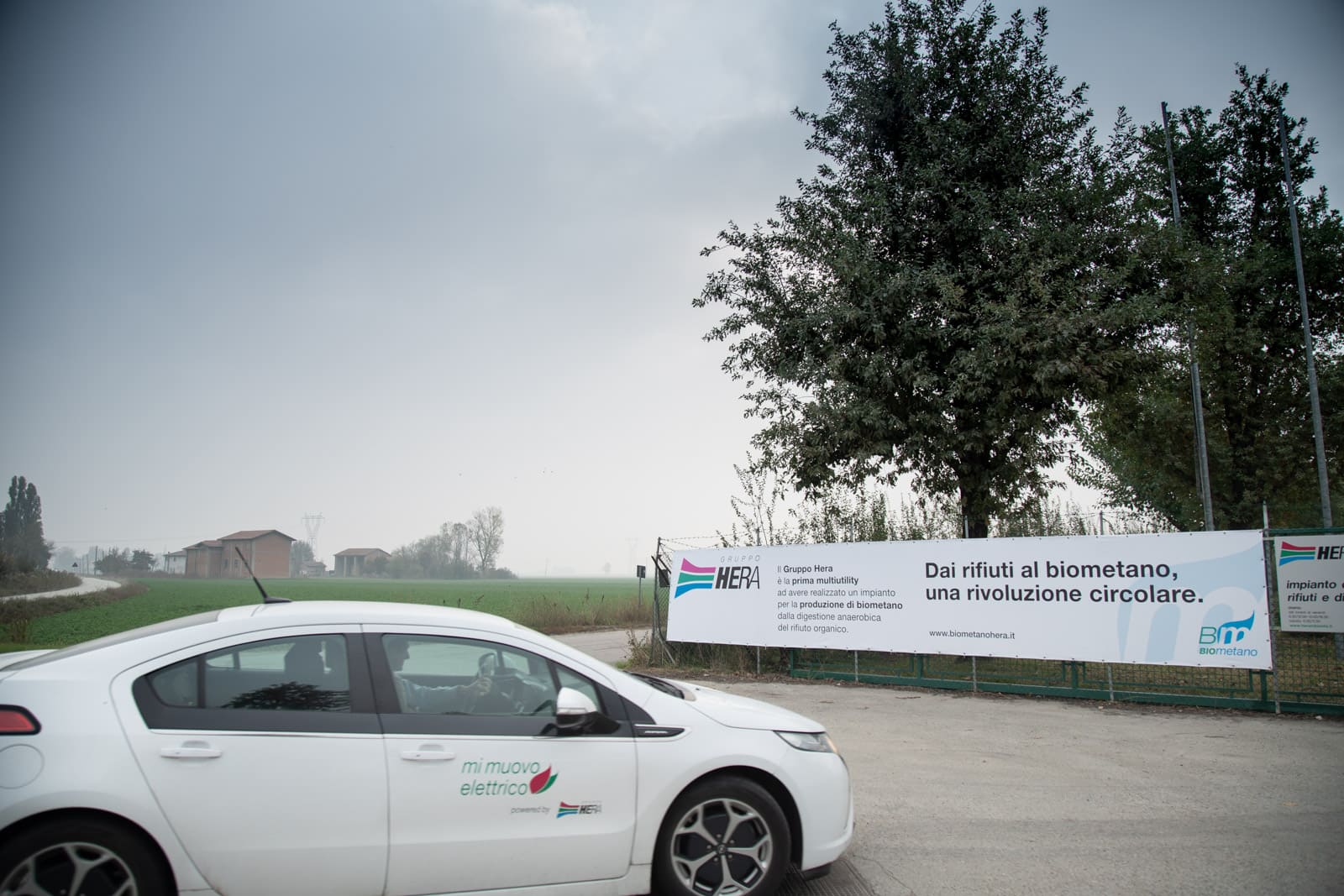
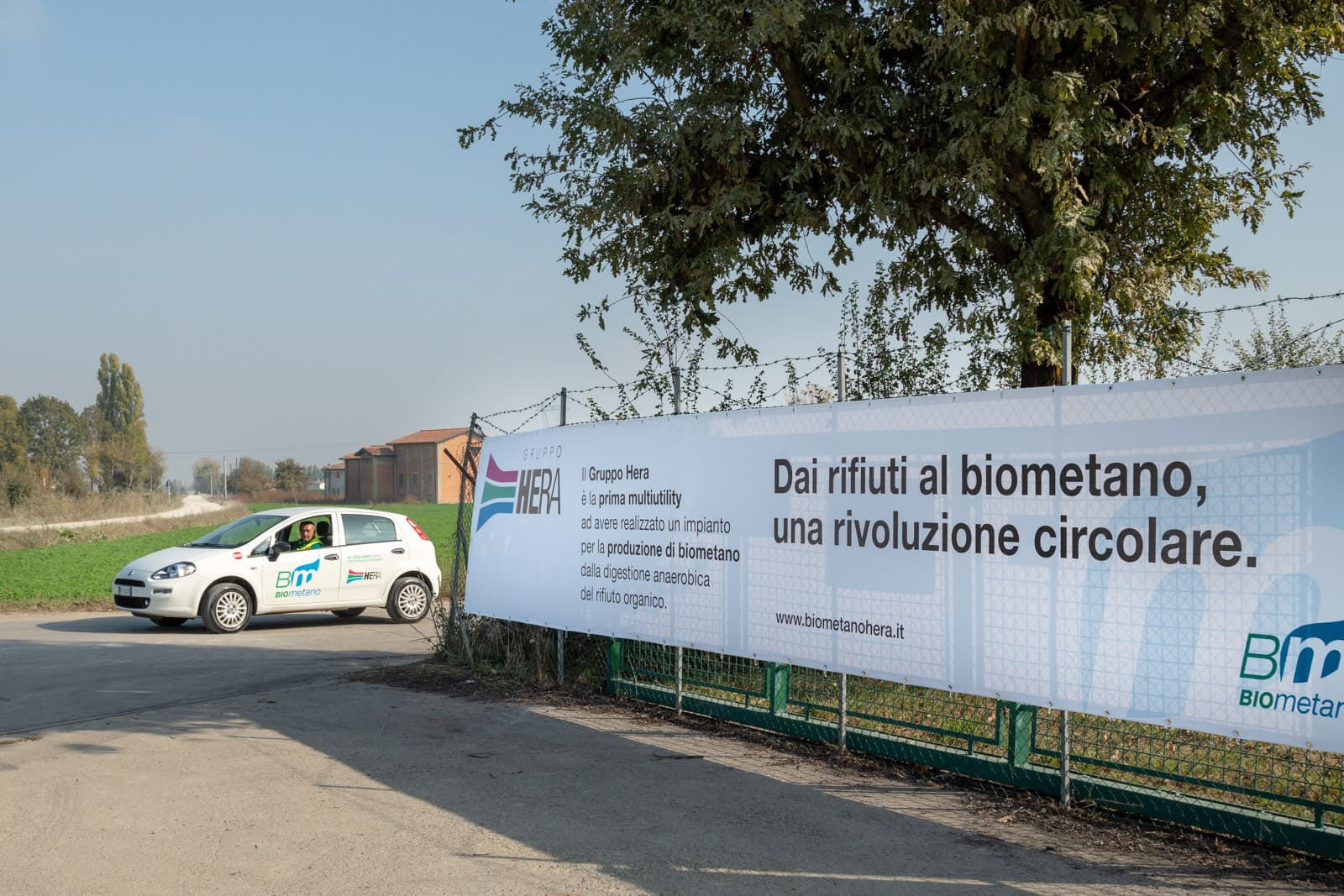
A revolution rooted in the circular economy: thanks to separate waste collection, organic waste is fed into an anaerobic digestion process to produce biogas.
Biomethane: a clean resource of biological origin
So, what makes this source of methane “bio”? Quite simply, it’s how it is produced: not by drilling into deep underground deposits, but by fermenting organic waste in dedicated facilities. Biomethane can be produced continuously, it is inexhaustible, and production can be increased simply by building more plants. This makes it one of the clearest examples of a circular economy.
In Spilamberto, a biodigester converted into a biomethane plant
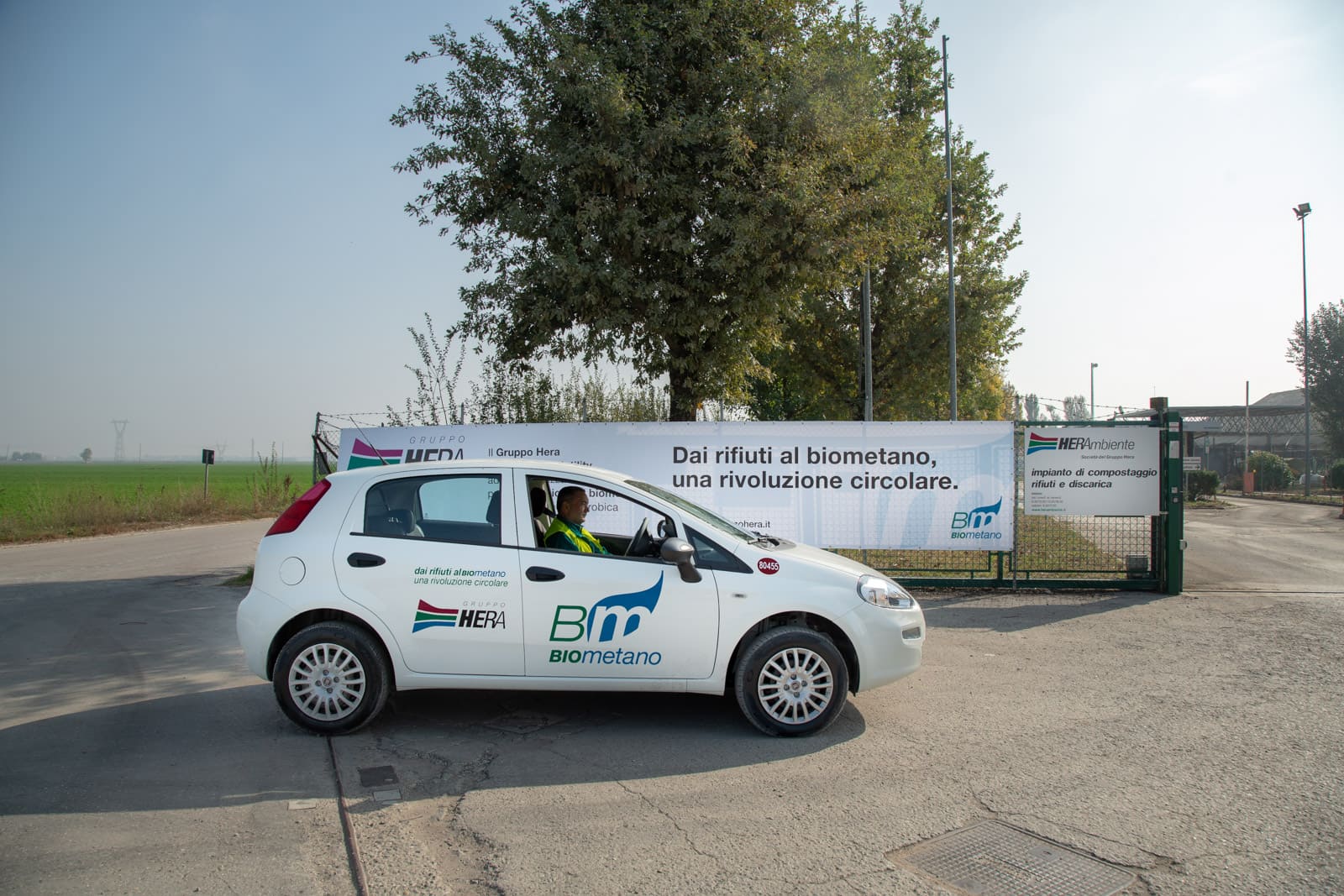
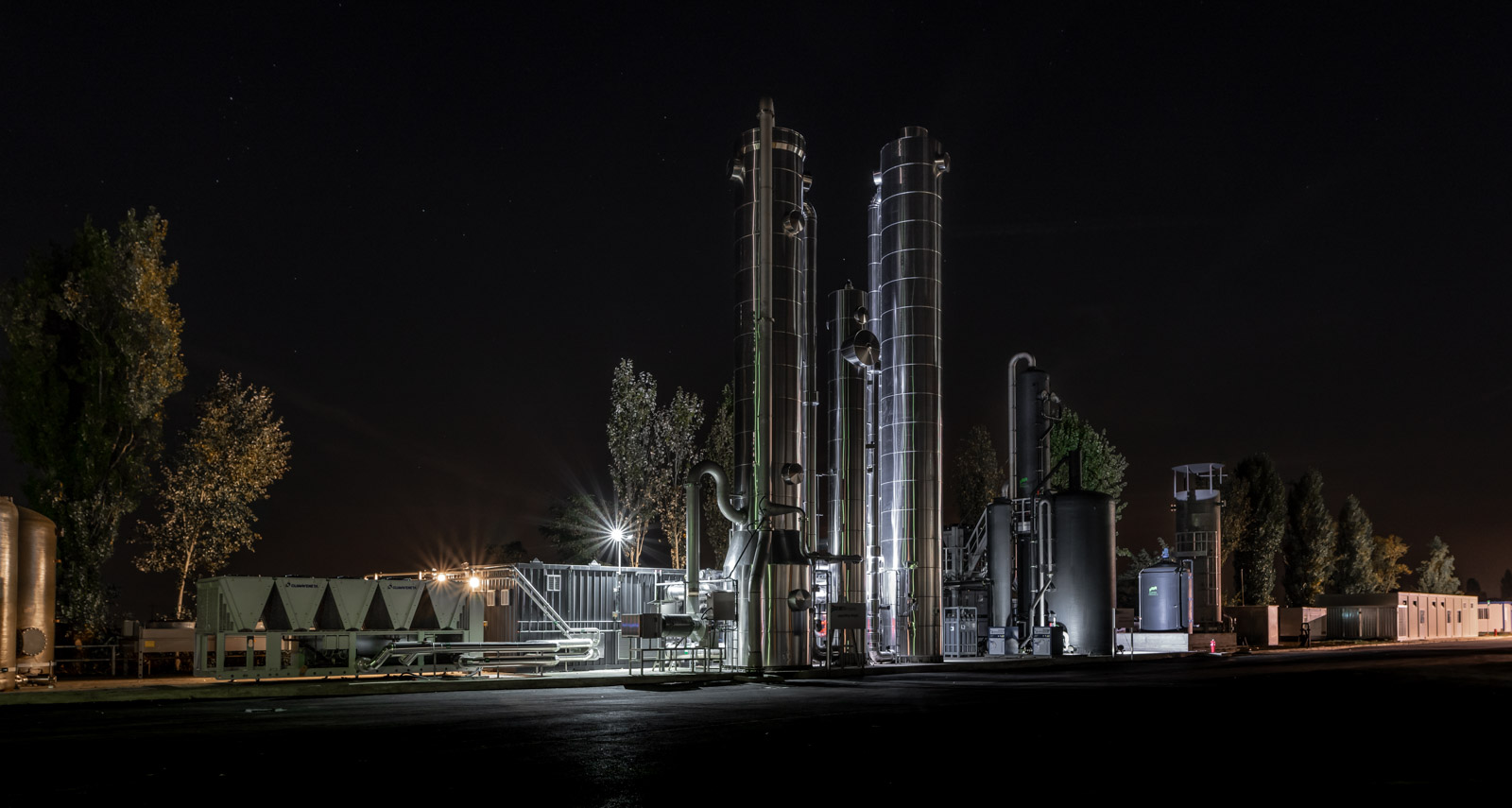
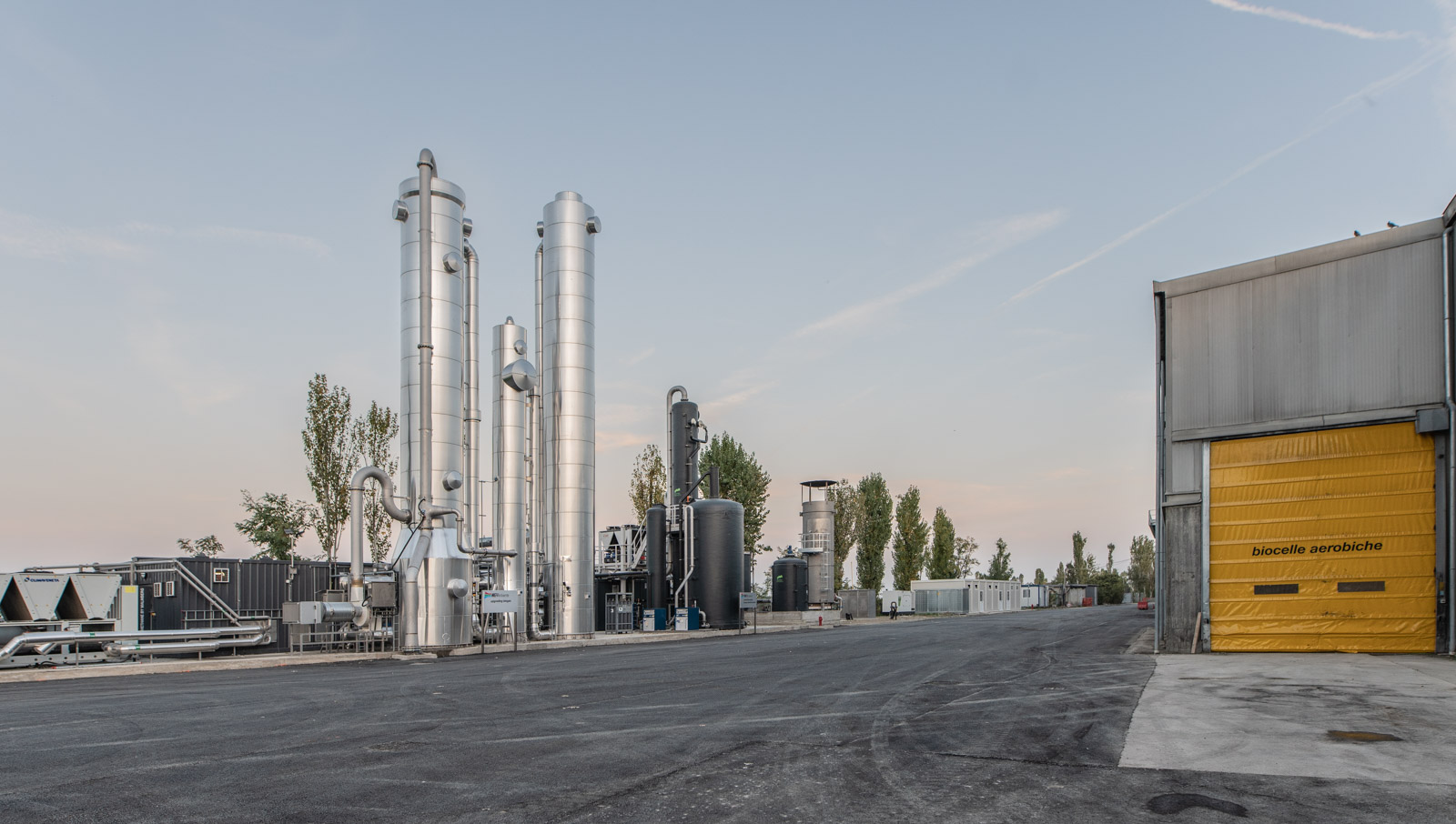
An innovative plant for the production of biomethane is in operation in Spilamberto, in the province of Modena. It was developed by the NewCo Biorg, a joint venture between the Hera Group and Inalca (Cremonini Group), through a total investment of around €28 million and the use of the best available technologies.
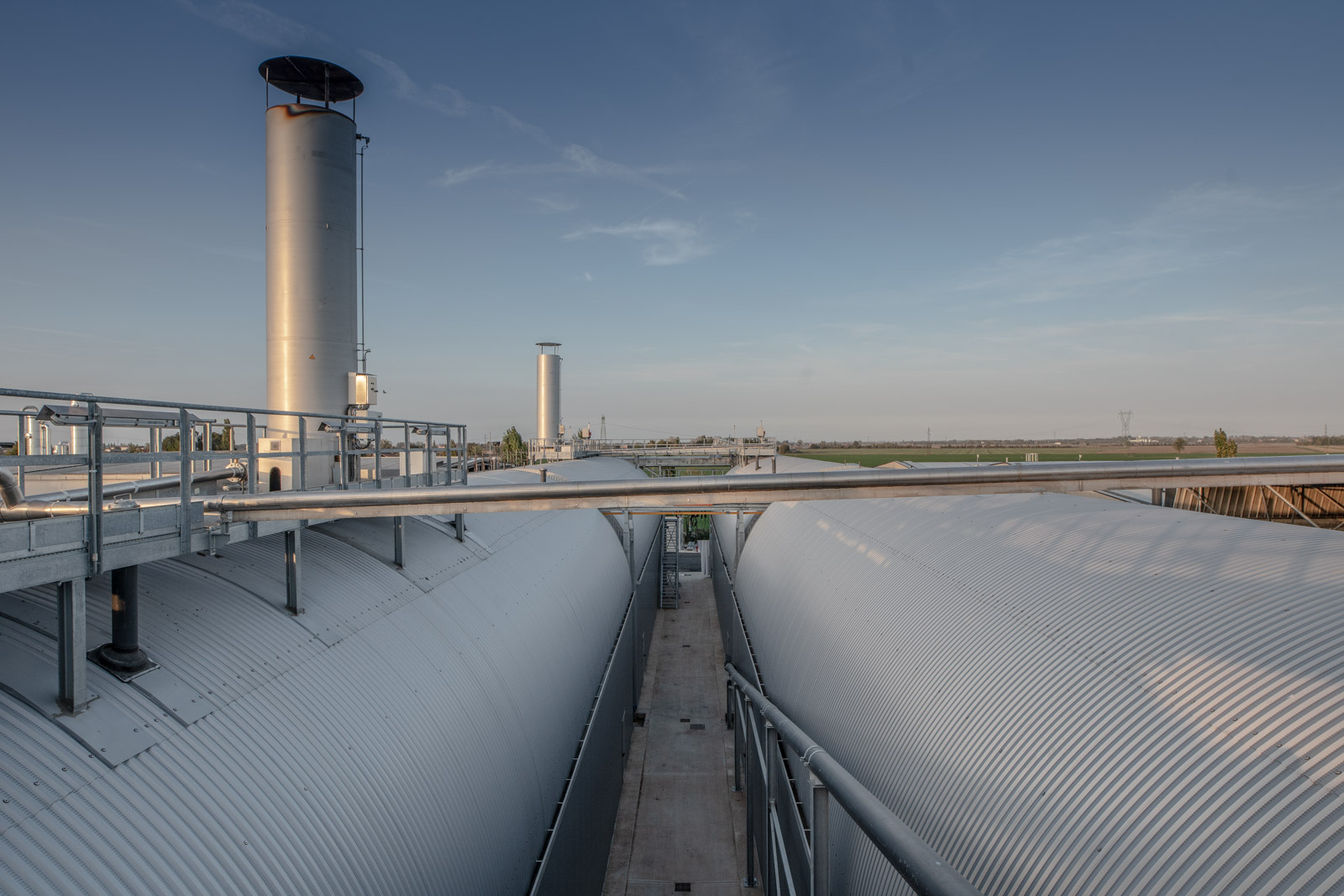
Starting from separately collected organic waste and agri-food effluents, the plant – the result of converting an old biodigester – produces, at full capacity, 3.7 million cubic metres of biomethane per year, a 100% renewable fuel intended for transport, and around 18,000 tonnes of compost.
A cutting-edge plant for the energy transition and the circular economy
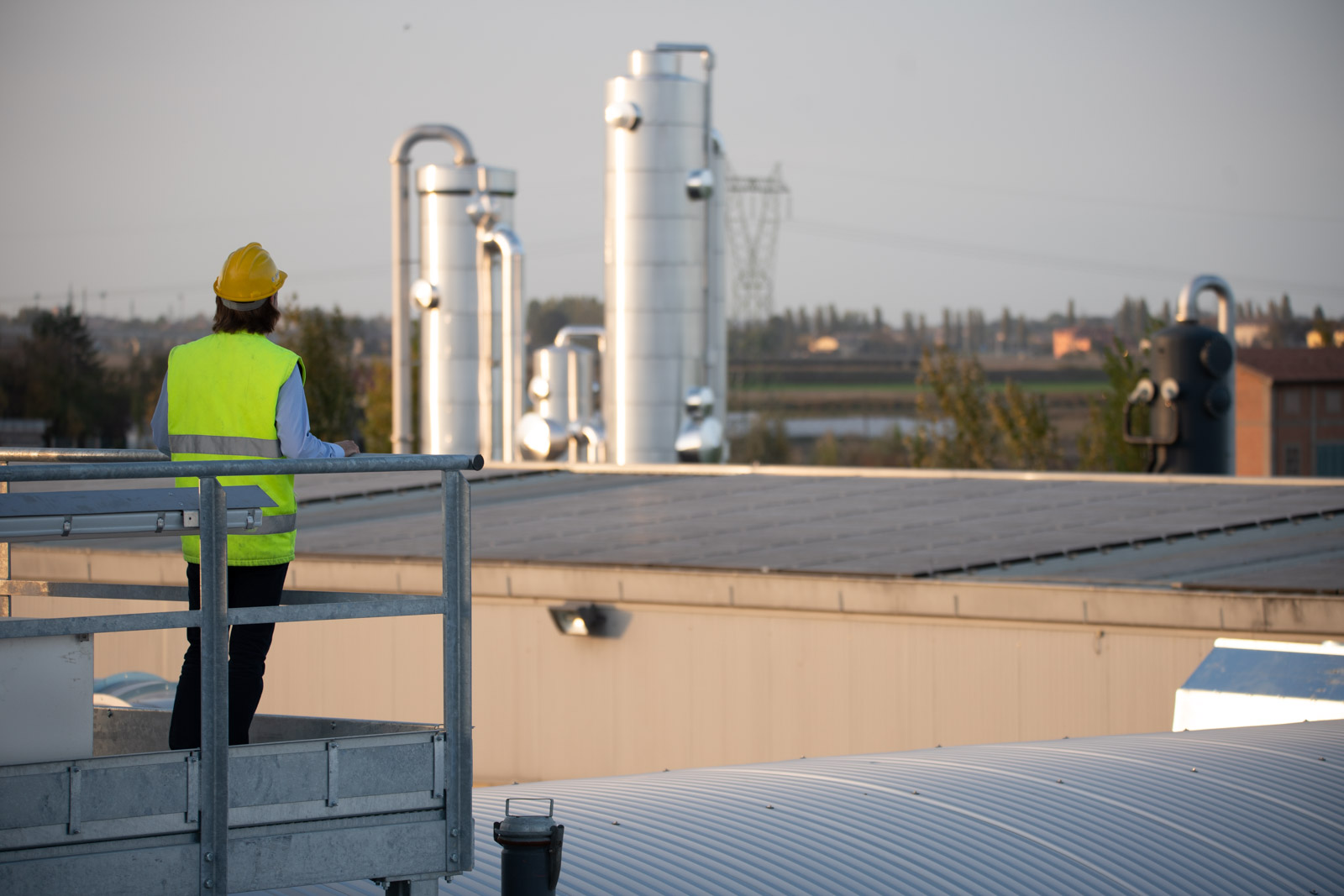
The 100% renewable natural gas is produced through anaerobic digestion of organic waste from separate collection carried out mainly in Modena and the province, along with waste from local agri-food processing and meat production by Inalca. Once refined, it becomes biomethane and can be fed into the gas network.
Significant environmental benefits: around 7,000 tonnes of CO₂ avoided
Thanks to the injection of biomethane into the network and its use in transport, significant environmental benefits are expected. Every year, around 3,000 tonnes of oil equivalent (TOE) in fossil fuels are saved, and approximately 7,000 tonnes of CO₂ emissions are avoided. Absorbing such an amount of CO₂ would require, on average, 280,000 trees.
What happens in our plant in Sant'Agata
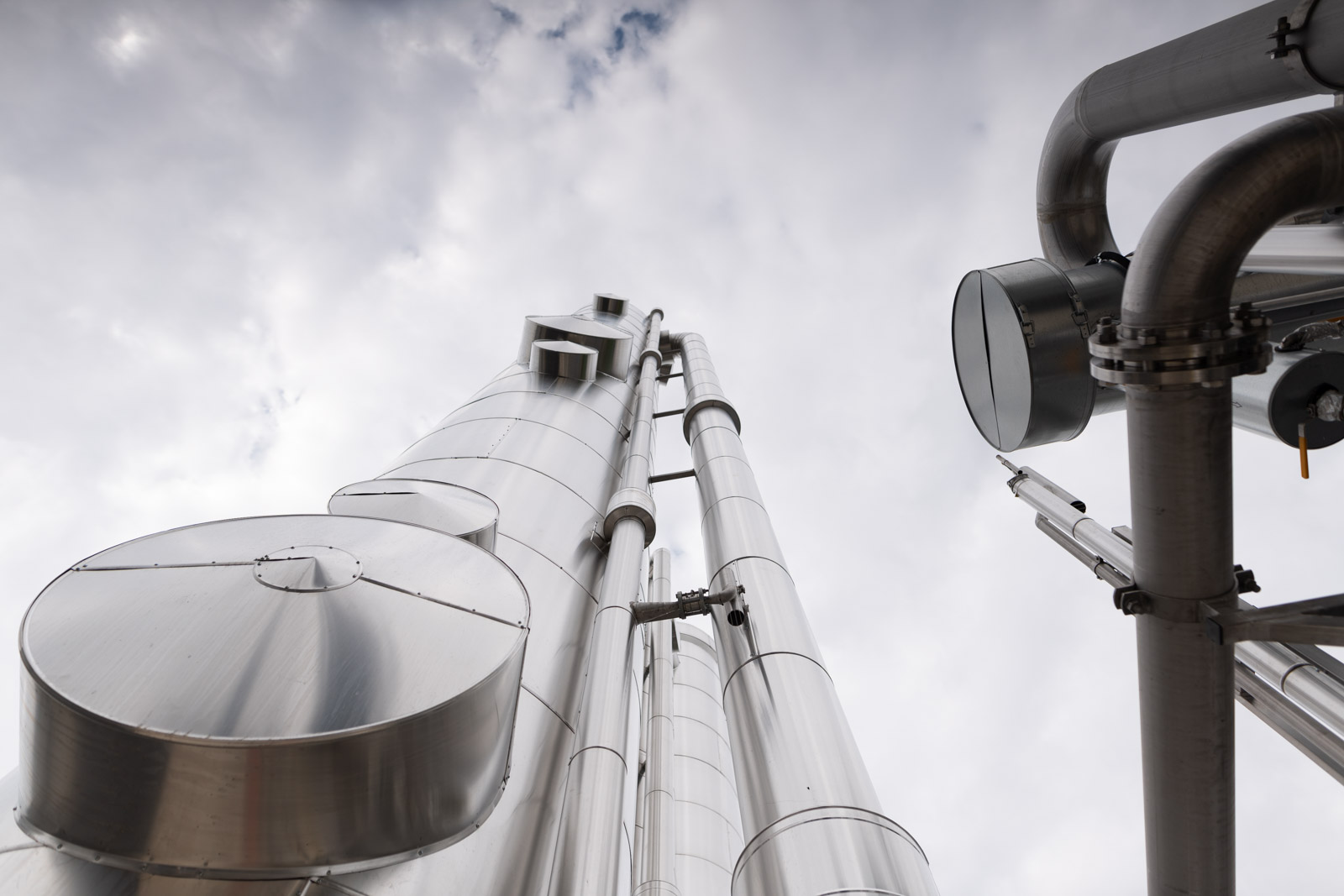
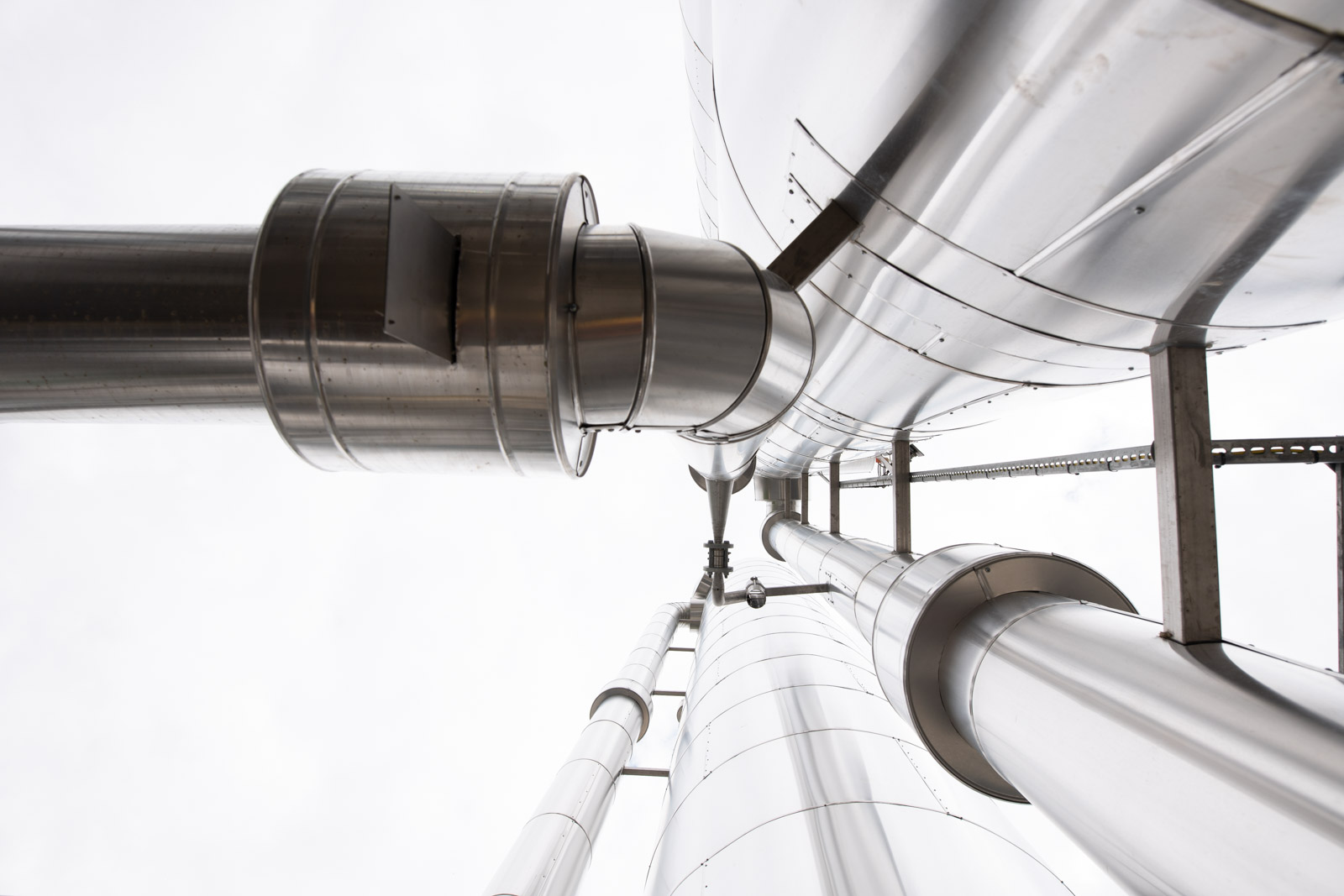
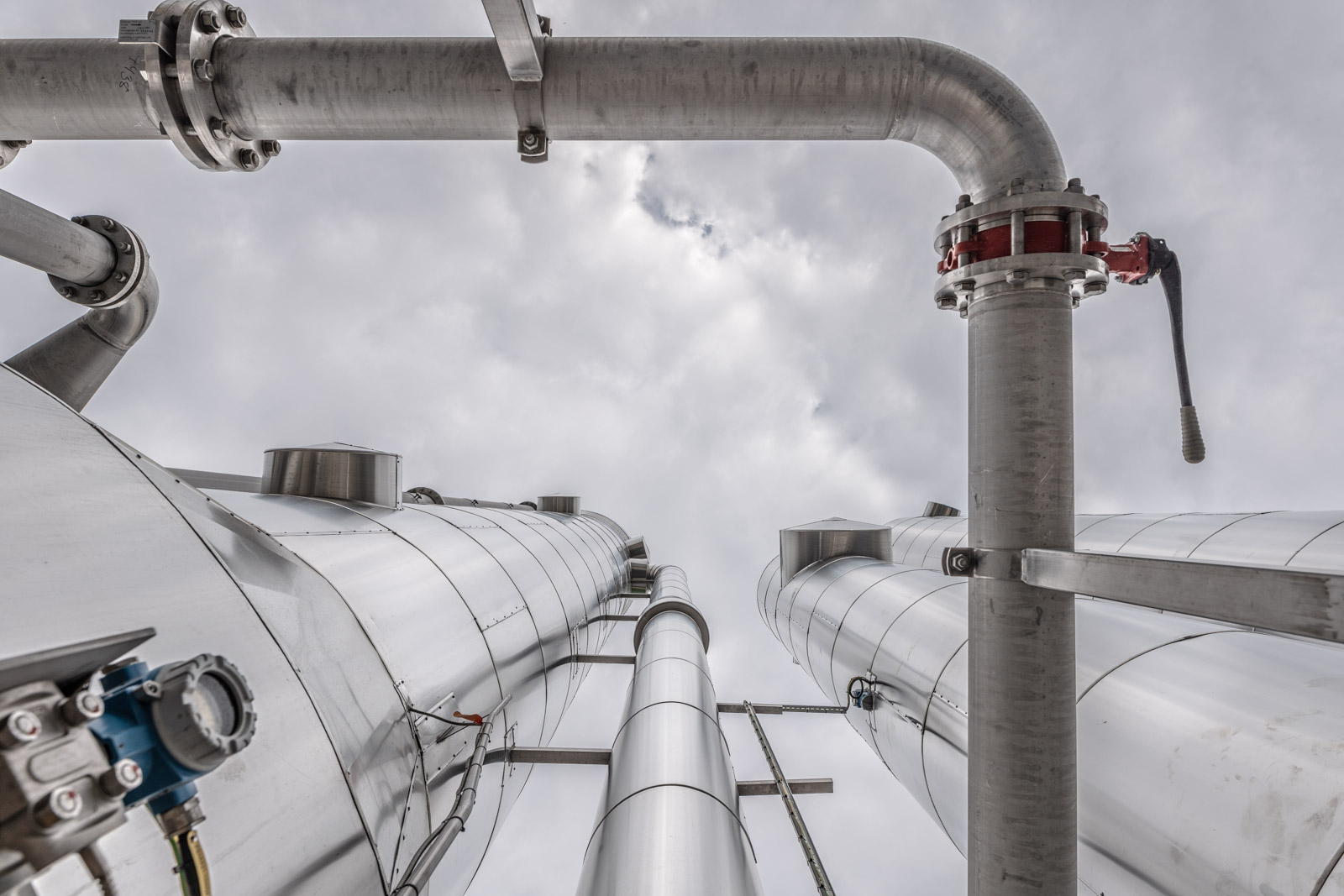
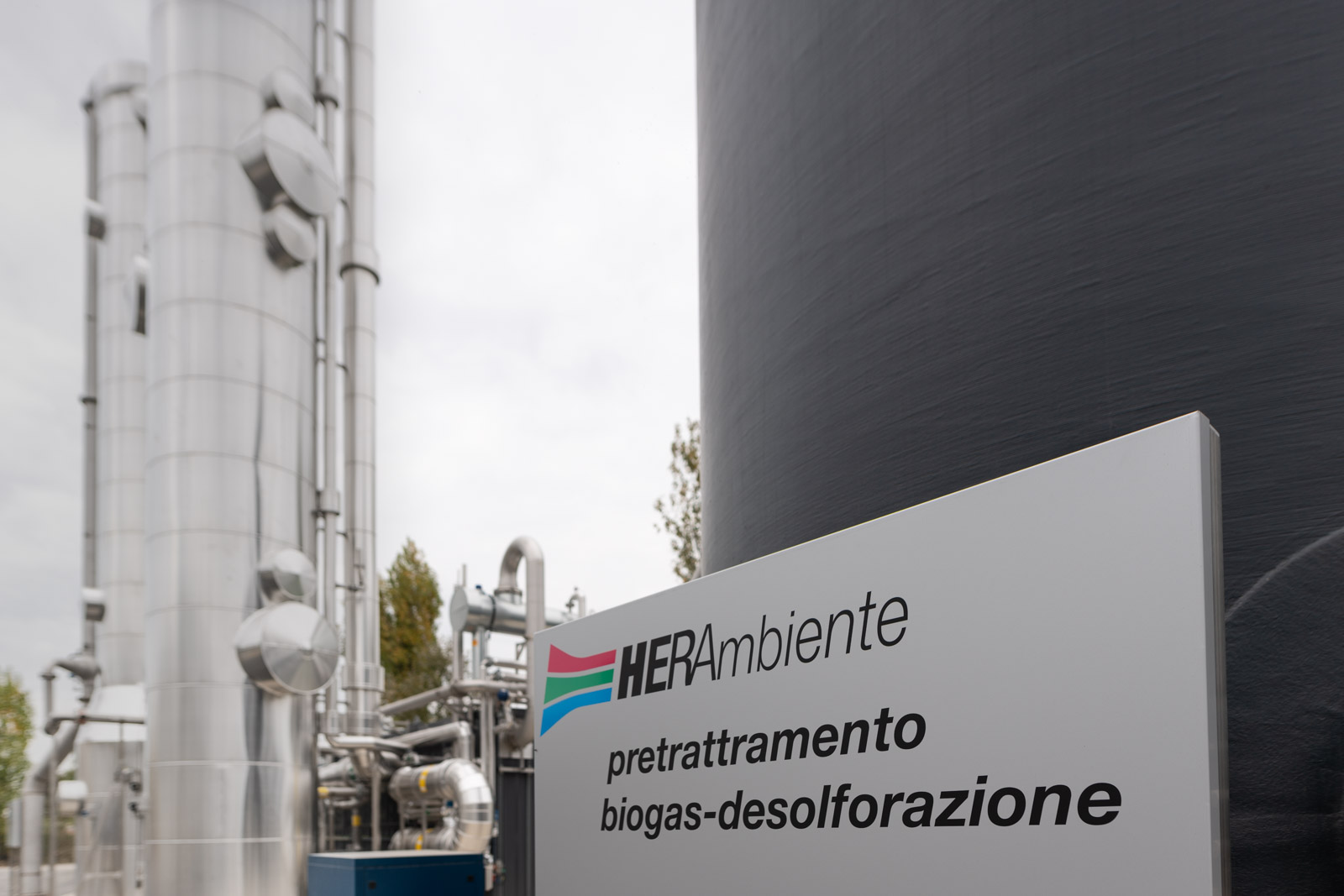
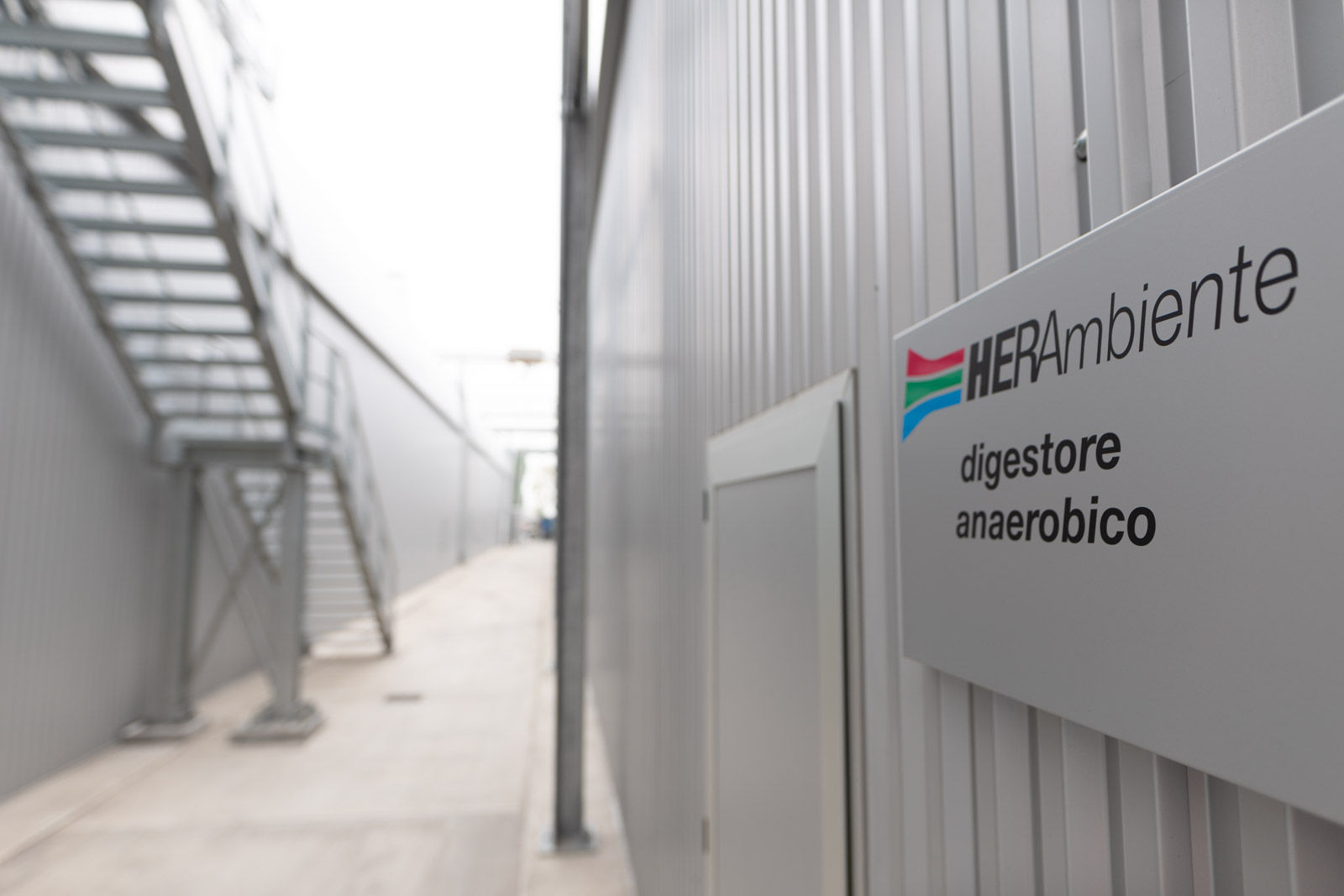
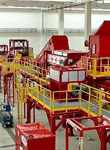
Organic waste, collected through separate waste collection, undergoes anaerobic digestion to produce biogas. This is how the process works: the waste is shredded and screened, then remains for about 21 days in four horizontal digesters, where suitable microorganisms carry out the digestion process and produce biogas (composed of methane and carbon dioxide). After this, the biogas undergoes an upgrading, or purification, phase using pressurised water: the carbon dioxide dissolves and separates from the methane. The result is biomethane, a gas with a methane content above 95%, and a completely renewable source of energy. Not only that: at the end of the digestion process, lignocellulosic material is added to the outgoing solid fraction, producing a compact mass that then undergoes composting to create high-quality compost, which can be used as potting soil or agricultural fertiliser.
Biomethane is therefore another revolution rooted in the circular economy, one that we at Hera Group are committed to advancing. We do all this with the goal of creating shared value, as Andrea Ramonda, CEO of Herambiente, emphasises: “The direction we have taken looks towards the industrial sector with an increasing focus to creating shared value and partnerships. We are aware that sustainable waste management, focused on recovery and in full compliance with regulations, is essential in today’s world and generates benefits for the entire community.”
Working together for a circular city
At Hera Group, we have joined forces with Bologna Airport and Tper to launch a circular economy project that contributes to decarbonising urban mobility and improving air quality.
What does this partnership involve? The Airport delivers its organic waste to Hera, which collects it at the Sant'Agata Bolognese plant together with similar waste produced by citizens and transforms it into biomethane that Tper purchases to feed the fuel tanks of a significant part of its bus fleet.
This is an important step forward for our Group and for two major organisations in our area, which, like us, serve hundreds of thousands of people. We share a commitment to improvement and sustainability, in line with the UN 2030 Agenda.
Energy Parks and agrivoltaics: innovative models of sustainable development
Innovative initiatives to generate renewable energy without additional land take and to support the energy transition and decarbonisation.

We help to decarbonise communities by promoting energy efficiency and developing plants that generate renewable energy. The goal is to create integrated local energy systems where generation and consumption are closely connected.
This vision gives rise to projects such as the Energy Parks in Bologna and Faenza, the agrivoltaic plant in Cesena built with Horowatt, and the photovoltaic park in the Ferrara area. These innovative initiatives aim to develop advanced agrivoltaic systems that will make a significant contribution to the energy transition in Emilia-Romagna.
What is an agrivoltaic plant?
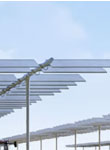
An agrivoltaic plant combines solar power generation with agriculture. Photovoltaic panels are installed high enough not to interfere with farming activities, allowing dual use of the land. This innovative technology maximises energy efficiency while preserving agricultural use, offering a tangible example of sustainability and cross-sector synergy.
Horowatt: Orogel's green revolution for Agriculture 4.0
Horowatt, the new company established by Hera S.p.A. and OROGEL Soc. Coop. Agricola, will build an innovative agrivoltaic plant at the Orogel’s site in Cesena, allowing to produce around 8 GWh per year, with more than 80% of the energy self-consumed by the cooperative’s facilities. The agrivoltaic plant will integrate the existing cogeneration unit built and managed by Hera Servizi Energia. This is an important project which will allow to reduce Orogel’s energy costs and provide significant environmental benefits: the plant is expected to avoid the emission of about 2,000 tonnes of CO₂ per year.
Another aim is to demonstrate the successful coexistence of agrivoltaic technology and agricultural production without additional land take, creating synergies with crops which will be protected from extreme temperatures and benefit from higher soil moisture. The photovoltaic panels will be mounted on metal structures about three metres high, allowing all farming operations to continue underneath. Thanks to advanced automation integrated with on-field sensors, the panels can be oriented in different directions and not only used to track the sun, ensuring maximum output.
Urban forests and renewable energy: the Energy Parks in Faenza and Bologna.
An innovative Energy Park will be developed in Faenza, combining renewable energy production with biodiversity protection. It will cover about 173 acres in the west area of the city and will consist of two main elements: an advanced agrivoltaic plant and an urban forest.
The agrivoltaic plant will occupy approximately 67 acres of land and will be divided into four areas. It will have a capacity of about 14 MW, with an estimated annual production of 21.5 GWh. Panels will be installed on raised structures to allow the transit of agricultural machinery and to maintain cultivation over almost the entire area (90-95%). They will also be bifacial, capturing light on both sides, and equipped with a solar-tracking system that automatically orients them towards the sun’s rays to maximise production.
Digital technologies will support agriculture by monitoring and optimising processes and reducing the environmental impact. Monitoring systems will also be installed to assess the plant’s effect on crop yields.
Alongside the plant, a 37-acre urban forest will be created, with native trees and shrubs. This green area will be divided into densely planted areas to foster biodiversity, with rows and hedgerows enriching the landscape. The aim is to enhance the area’s ability to support native plant species, pollinators and other wildlife, thereby increasing its ecological value.
Bologna is also set to host an advanced Energy Park promoted by the Hera Group, combining renewable-energy generation with ecological enhancement of the area. The project will cover about 168 acres in the northern area of the city, with an agrivoltaic plant and a new urban forest.
The agrivoltaic plant will make a significant contribution to decarbonisation, with an estimated reduction of around 6,000 tonnes of CO₂ per year. The urban forest will extend over 49 acres on the southern part of the site. It will be divided into different areas to promote biodiversity and improve urban liveability.
The project includes:
- An urban park area of about 3.2 acres, with woodland and clearings and with more than one hundred trees.
- A rustic meadow of 3.7 acres, accessible and natural.
- A biodiversity woodland across two areas of 13 and 16 acres, with around 2,500 trees planted without a fixed pattern to create a natural habitat for local fauna.
- An area with shrubs and grassland spanning 16.8 acres, with 900 shrubs, 6.9 acres of rustic meadow and 4.9 acres of wildflower meadow to attract pollinators and increase plant diversity.
- Around 200 trees planted in rows will help to shape the landscape and improve air quality.
This integrated urban park model is a concrete example of environmental regeneration and sustainable energy production, aligned with Hera’s vision of local energy systems in which generation and consumption are closely connected.
In the Ferrara area, a photovoltaic park for green energy
Clean solar energy will be generated in the countryside around Bondeno, in the province of Ferrara: the plant, installed over 22.2 acres, has a capacity of 9 MW and produces enough electricity to meet the annual consumption of 5,000 households. At full operation, it will allow to avoid the emission of almost 6,000 tonnes of CO₂ per year.
This project is an integral part of our distributed generation model, in which renewable energy is produced close to where it is used, from households to businesses.

.jpg/dcf653e1-7e5c-ffa3-4b75-2c24b285c27a "preview_satelliti (1).jpg")
.jpg/ec5b088f-780f-ff81-0bd7-652fdd1609b8 "preview_data_management (1).jpg")



.jpg/5c532605-0938-031b-74ff-89388f7410d3 "aliplast (1).jpg")