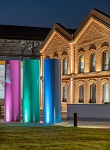
Hera Group unveils FIB3R, a pioneering plant that regenerates carbon fibre
Search Bar
Asset Publisher
Hera Group unveils FIB3R, a pioneering plant that regenerates carbon fibre
Innovation and performance define the first plant of this kind in Europe to operate on an industrial scale, built in Imola to recycle carbon fibre composites while reducing environmental impact. Here, end-of-life waste goes in and regenerated carbon fibre comes out, as light and strong as virgin fibre, ready to be reused in a potentially infinite cycle in various strategic Made in Italy sectors. At present, the Group’s plant is expected to produce 160 tonnes of recycled carbon fibre each year, with a 75% energy saving compared to virgin fibre
The Hera Group is moving swiftly towards the circular economy of the future and has inaugurated, in Imola (Bologna), at the heart of the country’s Motor Valley, the first plant of its kind in Europe, capable of regenerating carbon fibre on an industrial scale. It is called FIB3R, a name that reflects the 3 R's that stand at the basis of the project: recover, reduce, reuse. Carbon fibre is thus recovered and reused, reducing the use of virgin fibre and therefore the environmental impact that would be required to produce it.
There is one important competitive advantage: the fibre regenerated from FIB3R retains the virgin fibre’s characteristic lightness and high strength, guaranteeing - through a state-of-the-art pyrogasification process - that the regenerated product is ready to be reused, rewoven and/or impregnated, for the high-performance purposes for which this type of material is intended. The number of industrial sectors interested in these outstanding features is increasing, ranging from automotive to aerospace, nautical, furniture, textiles and fashion in the broadest sense, only to give a few examples.
The Hera Group’s commitment to advancing the ecological transition, as well as the expected increase in demand for carbon fibre over the next few years, have led it to anticipate this megatrend, accepting the challenge of applying it to this material as well, on an industrial scale. This will reinforce the virtuous path towards the circular economy that has been the basis of its strategy for years, combining economic growth with environmental sustainability. A path that places itself at the heart of the Italian Circular Valley, as this very territory has been developing material recovery initiatives with circular solutions for over forty years.
This path is the right one, as confirmed by the interest of the European Union, which has allocated FIB3R financing coming to more than 2.2 million euro as part of NextGenerationEU for its innovative technology and the strategic importance of the materials processed. The total investment planned by the Hera Group to build the Imola plant amounts to 8 million euro.
At present, the plant is expected to produce 160 tonnes of recycled carbon fibre each year, with energy savings coming to 75% compared to virgin fibre.
“FIB3R is the first plant of its kind in Europe able to recycle carbon fibre. It is aimed at promoting short and circular supply chains, in line with the strategy of making our served areas more competitive and resilient,” states Orazio Iacono, CEO of the Hera Group. “FIB3R is also a concrete example of how the Hera Group is able to combine technological innovation and sustainability, by exploiting the cross fertilisation between the advanced skills of the Group’s various sectors. Recovering carbon fibre not only reduces the environmental impact of this waste, but also creates new market opportunities in strategic industrial sectors. Investing in this kind of circular infrastructure increases the resilience of production chains, reduces dependence on imports of critical raw materials and, at the same time, creates value through sustainable business models. With over 100 advanced plants and 5 new facilities under construction, we have consolidated our country’s largest and most modern set of plants for material treatment and recovery, strengthening our role as a reference operator in the sector and a driving force for the circular economy in Italy. Our Business Plan confirms this strategy, with 2 billion euro in investments for 2024-2028 destined for regenerating resources, a commitment intended to generate value for all our stakeholders.”
This morning's inauguration of the FIB3R plant within the Group’s main facility in Imola, near Bologna, offered a chance to engage in a debate on the future of carbon fibre, combining innovation and sustainability. After the institutional welcome given by Marco Panieri, Mayor of Imola, and Irene Priolo, Councillor for the Environment, Local Planning, Mobility and Transport and Infrastructures of the Emilia-Romagna Region, Herambiente CEO Andrea Ramonda opened the event. This event saw the participation of important representatives of the industrial and academic communities: Davide Abate, Ferrari’s Chief Technologies and Infrastructures Officer; Roberto Frassine, Chairman of Assocompositi; Loris Giorgini, Director of the Department of Industrial Chemistry at the University of Bologna; Raffaella Luglini, Chief Sustainability Officer Leonardo; Horacio Pagani, Founder of Pagani Automobili; Andrea Rangone, Full Professor of Entrepreneurship and Digital Business Innovation at the Milan Politecnico; Ferruccio Resta, Chairman of the Fondazione Bruno Kessler FBK. The meeting came to a conclusion with a contribution by Orazio Iacono, CEO of the Hera Group.
Before FIB3R
The Imola plant was developed by Group subsidiary Herambiente, Italy’s leading waste recovery and treatment operator, which had been experimenting with the carbon fibre recovery process for some time. This involved a collaboration with the Department of Industrial Chemistry of the University of Bologna and its technological partner Curti Costruzioni Meccaniche, a Ravenna-based company and leader in the production of automatic machines for industrial applications, which offered its knowledge and pilot plant to model the formula being studied. After three years of tests, the Hera Group, based on its expertise in engineering and waste treatment, industrially developed the project and built the FIB3R plant, to recycle composite materials and help bridge the gap between supply and demand of virgin fibre, reducing its environmental impact.
Data sheet
How carbon fibre is reborn
In the Imola plant, the rebirth of carbon fibre happens inside a 60-metre tunnel where an innovative and advanced pyrogasification process takes place. In the first phase, pyrolysis, the carbon fibre, which is more resistant to heat, is released from the resin, and in the second phase, gasification guarantees a regenerated fibre of the highest quality, pure, shiny and entirely sustainable as regards the environment. The resin decomposed in a gaseous form is reused to generate part of the energy required for the process, maximising energy recovery. The dust remaining in the fibres is vacuumed and sent to the abatement system. The result, after treatment, is the finest high-purity carbon fibre, with all its mechanical properties intact and ready to be rewoven and impregnated for all the typical uses of virgin fibre.
Energy savings and closing the circle
The recycling is potentially infinite and energy savings are very high compared to the production of virgin fibre, which is extremely energy intensive due to the high temperatures used. Furthermore, producing virgin carbon fibre requires the use of fossil raw materials and an increased reliance on landfills, since waste from fibre processing is almost exclusively destined for disposal. Life cycle analysis shows that energy demand for producing recycled fibre is 75% lower and avoids 74% of greenhouse gas emissions, significantly reducing disposals in landfills. And that’s not all: the unique nature of FIB3R also depends on the total traceability of the processed material. The used carbon fibre, in fact, enters the plant inside containers equipped with a QR code, which contains their identity card: technical characteristics, weight and origin. Once the process is complete, the same traced material returns to its owner in the form of regenerated carbon fibre, closing the circle and ensuring maximum sustainability, transparency and quality.
FIB3R’s travelling companions
To be effective, the closed cycle that distinguishes the innovative Imola plant needs partnerships between Hera Group and companies in the complex carbon chain, given that this material is increasingly present in hi-tech production sectors and, consequently, in waste management cycles. The Leonardo Group has already taken up the challenge of applying the circular economy to its production processes and, in this specific case, through its Aerostructures Division, it has launched an industrial synergy with the Hera Group by supporting a project within the Imola plant to recover carbon fibres used to reinforce the polymer matrix composites used to construct aircraft parts. Therefore, thanks to Herambiente’s assets and the know-how developed in the Leonardo Group’s laboratories, this precious material will be recycled with positive consequences in terms of sustainability and circularity. More specifically, Leonardo’s Aerostructures Division will confer to Herambiente part of the waste fibres deriving from the construction of the components of some of the best-known civil aircraft in the commercial aviation sector, such as the stabiliser of the ATR turboprop, the fuselage and horizontal stabiliser of the Boeing 787, and the tail pieces of the Airbus A220.
Download Press Release
Hera Custom Facet Publish Date
Custom Facet
Category Facet
Asset Publisher
The Consolidated Half-Year Financial Report as at 30 June reports a 16% increase in net profit and a 56% rise in investments, higher than in the previous period. The operational and financial soundness has been confirmed and the targets for the current year with regard to external growth have already been achieved in the first half. The results achieved at the end of June will enable the multi-utility to further enhance its infrastructure in the second half of the year and seize new development opportunities.
Economic and financial highlights Revenues adjusted* at €6,494.6 million (-3%)
- EBITDA adjusted* at €715.5 million (+7.5%)
- Net profit attributable to shareholders adjusted* at €227.6 million (+15.8%)
- Investments of €652.5 million, up 56%
- ROI adjusted* at 9.4% and ROE adjusted* at 10.9%
- Net financial position at €4,248.6 million, with a net debt/EBITDA ratio of 2.75x
The Hera Group's Board of Directors, chaired by Executive Chairman Cristian Fabbri, today approved the consolidated results as at 30 June 2026, which show a positive structural performance, with margins and net profit up compared to the same period of the previous year. The growth is even more significant if the results are compared with the first half of 2025 adjusted.
The results achieved highlight the Hera Group's ability to operate effectively even in a macroeconomic and geopolitical environment characterised by elements of uncertainty. The continuation of international tensions and the volatility of the energy markets did not affect operations, which recorded an improvement in gross margins and operating profit or loss compared to the first half of 2025, confirming the solidity of the business model and the constant generation of value.
The group’s business strategy, based on a balance between regulated and free-market activities, remains a key element for addressing the challenges anticipated for the remainder of 2026. The diversification of businesses and the ability to promptly seize the opportunities offered by the market make it possible to pursue the industrial growth and sustainability objectives defined by the Business Plan, confirming the solidity and flexibility of the Group's business model.With reference to growth opportunities through M&A, during 2026 the multi-utility further strengthened its presence, especially in waste management, through the acquisitions of the Sostelia Group, one of Italy's leading operators specialising in industrial and civil water treatment technologies and services, and of control of Servizi Ecologici Ambientali (SEA), which operates a multifunctional special waste storage and treatment facility located in Camerata Picena (Ancona).
Cristian Fabbri, Executive Chairman of the Hera Group, stated:
"The results achieved by the Hera Group as at 30 June 2026 confirm the strong impetus for growth provided by the Business Plan. The more than 7% increase in EBITDA on a like-for-like basis compared with the first half of 2025, is supported by all business lines and highlights the strength of the business portfolio, despite a complex external environment. The acceleration in investments, which exceeded 650 million euro, up by more than 50% compared to 2025, testifies to the Group’s ability to continue its path of external growth through M&A and infrastructure development, as reflected by the fact that 65% of EBITDA is generated by infrastructure businesses, 44% of which are regulated. The significant increase in development capex, which exceeded 800 million euro over the last 18 months, is only partially reflected in the results achieved in the first half of the year and constitutes a visible reserve of value to support future growth. The increase in net profit, in line with analysts' estimates before the IRAP surcharge, and the 9.4% return on invested capital highlight the Group's consistent focus on value creation.”
Orazio Iacono, CEO of the Hera Group, stated:
“In the first half of 2026, the Group achieved further improved economic and financial results compared to the corresponding period in 2025, despite a macroeconomic environment characterised by persistent elements of uncertainty. Net profit attributable to shareholders amounted to 227.6 million euro, up 15.8% compared to the like-for-like figure for the first half of 2025. This trend confirms the Group's ability pursue growth and transferring it down to the bottom line of the P&L. The acceleration of investments, both organic and for the M&A of Sostelia and SEA, was supported by the solid operating cash flows, exceeding 700 million euro in the first half of 2026. The strength of the capital structure is confirmed by a net financial position/EBITDA ratio of 2.75x, a figure that also incorporates the effects of the annual dividend recent distribution and shows ample room to fund further growth opportunities."
New view by business line
In line with the representation used for the Business Plan and with a view to continuously improving information for investors and stakeholders, starting with the financial report for the first half of 2026, an analysis of results by business line (Networks, Energy, Waste and Other Services) has been introduced as an alternative to the historical representation based on business areas (Gas, Electricity, Water Cycle, Waste and Other Services) giving a better accountability to our strategy.
Revenues adjusted at €6.5 billion
Revenues for the first half of the year amounted to €6,494.6 million, compared to €6,645.0 euro as at 30 June 2025, mainly due to the reduction in volumes in the last resort markets and Consip.
EBITDA adjusted up 7.5%
EBITDA as at 30 June 2026 stood at 715.5 million euro, up 7.5% compared with the first half of 2025 adjusted thanks to the contribution of all business areas. 65% of EBITDA adjusted is generated by the two infrastructure business areas, Networks and Waste.
EBIT adjusted rises
EBIT as at 30 June 2026 rose to 386.5 million euro, recording double-digit growth (+14.7%) when compared with the adjusted value for 2025. This result is due to normalised provisions, which offset higher depreciation and amortisation related to infrastructure growth.
Net profit attributable to shareholders adjusted up 15.8%
Despite the increase in the tax rate to 29.5%, compared with 29.0% in the first half of 2025, due to the increase in IRAP for the 2026-2027 period introduced by the Bollette Decree, adjusted net profit as at 30 June 2026 rose to €245.8 million, up 13.5%. Likewise, adjusted net profit attributable to the Group's shareholders increased to €227.6 million (+15.8%), compared with the adjusted result for the first half of 2025. Excluding the IRAP surcharge, net profit attributable to the Group's shareholders adjusted would amount to €232 million, in line with analysts' consensus estimates. All these results once again confirm value creation for all stakeholders, fully in line with the expectations set out in the Business Plan.
Investments up 56% and further strengthening of the Group's solidity
In terms of capital expenditures and investments, the Hera Group also recorded significant growth compared to the previous year, confirming its commitment to expanding infrastructure and strengthening the resilience of the assets under management, and to promoting technological evolution in support of the green and digital transition.
In particular, operating capital expenditures in the first half of 2026, including capital grants, rose to 510.5 million euro (+23.3%) compared to 414 million euro at 30 June 2025.
In addition to operating capital expenditures, there were investments for M&A relating to Sostelia and SEA amounting to 142 million euro.
In the first half of the year, operating capital expenditures plus those for M&A, amounting to a total of 652.5 million euro, were up 56% compared to 417 million euro in the same period of 2025. Even considering only development capital expenditures and M&A, a significant acceleration was achieved: they increased 2.6-fold to 362 million euro, compared to 137 million euro in the same period of 2025. This commitment is perfectly consistent with the strategy set out in the Business Plan, which reflects the strong execution and has enabled a relevant acceleration in the first half of the year.
As at 30 June 2026, ROI adjusted stood at 9.4% and ROE adjusted at 10.9%, despite the fact that development investments have not yet fully contributed to the year’s results (due to regulatory “time lag”).
The net financial position stood at 4,248.6 million euro, up from 3,944.4 million euro as at 31 December 2025, with a net debt/EBITDA ratio of 2.75x, confirming the financial strength and flexibility of the multi-utility, which will be able to continue to seize further growth opportunities, both organic and through M&A.
Sustainability: shared-value EBITDA is growing, reaching almost 60% of the total
In the first six months of the year, shared-value EBITDA, relating to business activities that also contribute to the objectives of the Global Agenda, rose to 435 million euro, accounting for 59.9% of total EBITDA, up one percentage point compared with the same period in 2025.
The Hera Group has continued to work intensively to combine its growth strategies with the generation of value in the medium and long term, as confirmed by the numerous milestones achieved: from the inclusion of Hera’s stock in the FTSE4Good Index Series for the seventh consecutive year, for its active commitment to sustainable development, to first place in the ESG Identity Corporate Index 2026, obtained for the integration of ESG factors into its strategy, governance and corporate culture.
Networks
EBITDA of the networks business line – which includes the integrated water service, gas and electricity distribution, and district heating – stands at 284.9 million euro, up 5.8% compared to the first half of 2025 adjusted, due to organic growth in all the network services managed, thanks to tariff adjustments linked to the recognition of the RAB, inflation and the implementation of the final 2024 electricity tariffs. Specifically, the main changes are noted in the water cycle, with an increase of 5.2 million, followed by electricity distribution with an improvement in margins of 5.0 million, and gas distribution with an increase of 4.1 million.
During the first half of 2026, gross investments in the networks business line amounted to 336.6 million euro, up 24.8% compared to the previous year. Capital grants, standing at 48.9 million euro, were up compared to the previous year and included 33.7 million euro relating to projects accessing NRRP funds. Capital expenditures mainly went towards extensions, remediation and upgrading on distribution networks and plants, as well as regulatory adjustments for the large-scale meter replacement and in the purification and sewage sector of the integrated water service.
The most significant investments include the construction of the new Bubano (Bologna) water treatment plant serving 13 municipalities in the Ravenna and Imola areas, aimed at increasing the available water reserve, ensuring greater operational flexibility, and meeting the development needs of the area, and the continuation of the Rimini Bathing Safeguard Plan, with the construction of two new retention and first flush rainwater tanks in Bellariva and Rivazzurra. As was already the case in Piazzale Kennedy, the hydraulic works will also become a real opportunity for urban regeneration in this case, with the subsequent construction of two viewing platforms above the new facilities. Also note the upgrading and expansion of the Ravenna purification plant and the construction of the new power-to-gas plant at the IDAR purification plant in Bologna. The trial in Castelfranco Emilia (Modena) for the introduction of mixtures of methane and hydrogen in progressive percentages up to 10% into the city's distribution network was also successfully completed. In Trieste, the works related to the smart grid, recognised as a national best practice in terms of network flexibility, have been completed. On the district heating side, the main investments concerned Bologna (interconnection of four district heating systems, currently physically separate, with simultaneous extension of the network to maximise heat recovery from the waste-to-energy plant), Ferrara (doubling of heat production from the geothermal source and expansion of the network in currently unserved urban areas) and Forlì (with the connection of three district heating systems and the laying of a new main network to increase the amount of heat recovered from the waste-to-energy plant). In the networks segment, over 520 million euro of investments have been made that are already operational but have not yet contributed to the results, pending the end of the 'time lag' period provided for by the tariffs regulation.
The networks business line contributed 39.8% of the Group’s adjusted EBITDA.
Energy
Adjusted EBITDA of the Energy business area – which includes the sale of natural gas and electricity, energy services, power generation and public lighting – amounted to €236.9* million, up 15.3% compared with the adjusted first half of 2025. The increase was supported by all activities within the business, from sales and trading to value-added services, energy efficiency activities and the margins generated by the Gradual Protection Service (STG) segment.
Gross investments in the energy business line amounted to 55.4 million euro, up 7.2% compared with the first half of 2025. The increase derives mainly from investments in electricity generation plants, with plant solutions that favour their construction at consumption centres. With a view to constantly focusing on the needs of its customers, the process of strengthening the physical presence in the areas served continued in the first half of the year with the restyling of priority branches such as the one in Forlì and the opening of new branches. In the first half of the year, the construction of the two Hydrogen Valleys of Trieste and Modena was also almost completed. These will produce more than 620 tonnes of green hydrogen per year, contributing to the decarbonisation of companies and, more generally, of the reference territories and, at the same time, to the redevelopment of brownfield sites.
With regard to public lighting, the percentage of lighting points using LED lamps increased in the first half of the year, reaching almost 70% of the total, confirming the Group's constant focus on an increasingly efficient and sustainable management of public lighting.
The energy business line contributed 33.1% of the Group’s adjusted EBITDA.
Waste
EBITDA for the waste management business line – which includes waste collection, treatment and recovery services – amounted to 178.6 million euro, compared with 175.5 million euro in the first half of 2025. In addition to the positive contribution resulting from changes in the scope of consolidation, with the integration of the Sostelia Group and SEA, the result benefited from treatment and recovery activities due to the higher volumes sold by Aliplast, the strong performance of ACR Reggiani in remediation activities, and the higher volumes of electricity sold by waste-to-energy plants. All these activities more than offset the reduction in the average unit market price compared to the same period of the previous year and the lower contributions from the Feronia's landfill - now back to full operations - due to a temporary administrative shut-down that has now ended. In the urban waste service, higher margins were reported, mainly related to inflation adjustments, greater efficiencies and higher supplementary services required in the tender areas.
Capital expenditures in the waste management business line amounted to 111.4 million euro, up 27.3% compared with the H1 2025, and related to maintenance and upgrading works at waste treatment and recovery plants.
In particular, approximately 80 million were invested in the upgrading of treatment and recovery plants: among the most significant interventions are the continuation, in line with the schedule, of the construction of the fourth line at the Padua waste-to-energy plant and the completion in Modena of a state-of-the-art plant for the recycling of rigid plastics and PE reprocessing, partially financed by NRRP funds, which will be inaugurated in the second half of 2026.
Thanks to the Modena plant and other projects currently underway – such as the new PE-LD recycling plant in Borgolavezzaro (Novara), which will be completed in 2027, and the acquisition of 70% of the newco Kronos Polymer Polska, for which a binding agreement has already been signed with the closing expected by the end of 2026 – the industrial synergies already existing within the Hera Group will be further strengthened, and the subsidiary Aliplast will be able to increase its recycling flexibility, doubling its capacity.
At Group level, thanks to the projects currently being finalised, the waste treatment and recovery capacity will be increased by more than 240,000 tonnes in total by the end of 2026.
In the urban waste collection activities, in the first half of 2026 the Hera Group further improved the quality and quantity of separate collection, reaching 76.8%, compared to 75.3% as at 30 June 2025.
The waste management business line contributed 25% of the Group’s adjusted EBITDA.
Other services
EBITDA for the other services business line – which includes telecommunications and other minor services – stood at 15.2 million euro, stable compared to the first half of 2025.
The other services business line contributed 2.1% of the Group’s adjusted EBITDA.
Special items /Consolidated financial statements reconciliation
The following table provides a reconciliation between the managerial statement of profit or loss and the consolidated statement of profit or loss drafted pursuant to accounting standards.